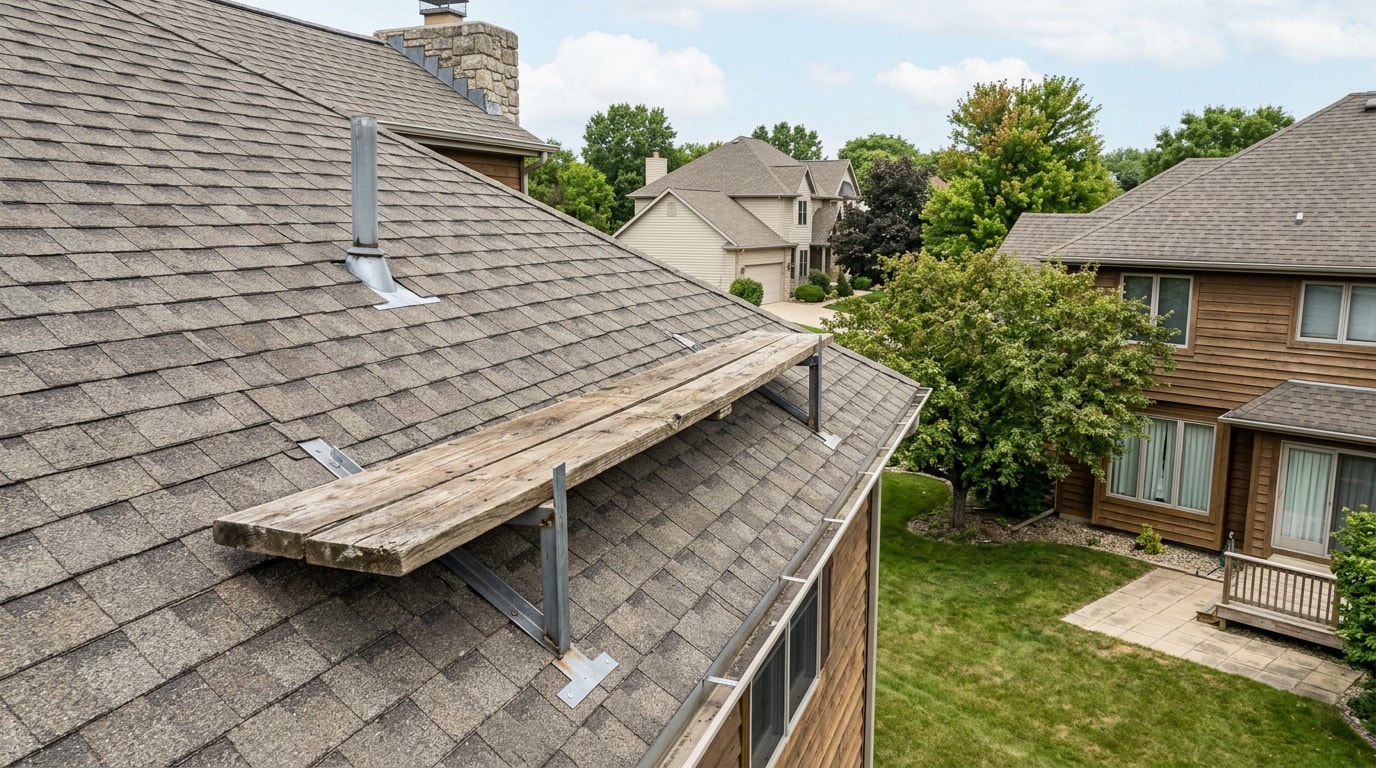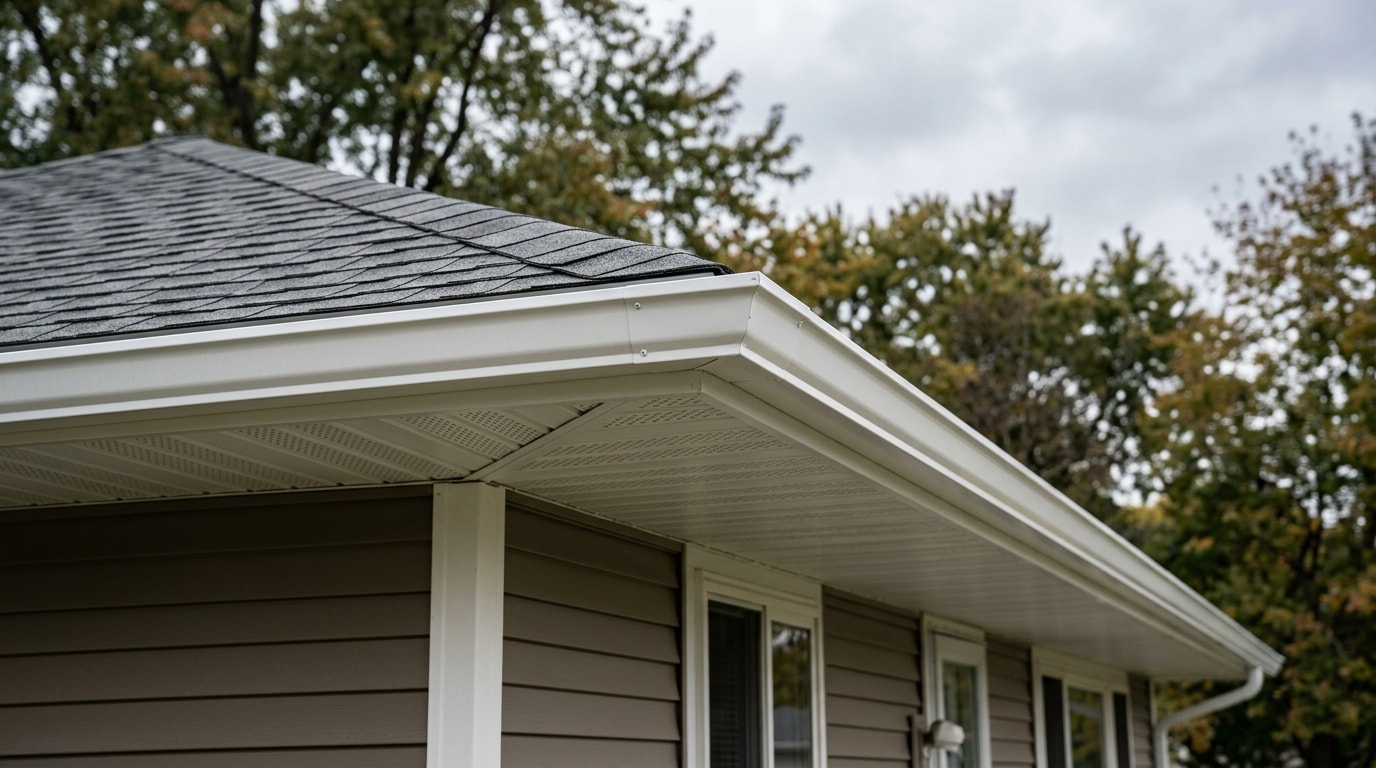
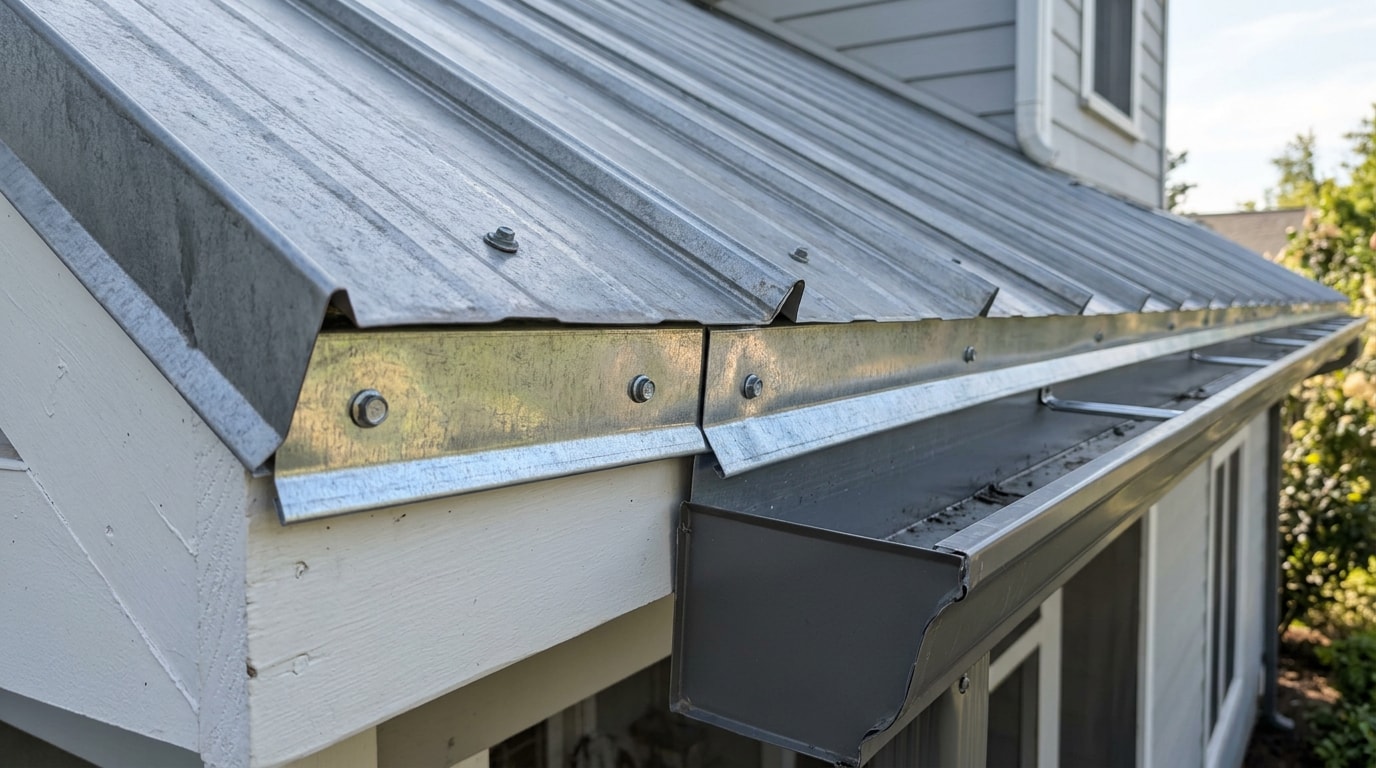
Drip edge for metal roofing in Chatham, IL is the one piece of flashing most likely to get skipped during a quick reroof, and it's usually the first thing we check when a homeowner calls about rot along the fascia. This L-shaped metal strip runs along the eaves and rakes, carrying runoff from the panel edge into the gutter instead of behind the fascia board. Skip it, or install it wrong, and a metal roof that should last decades can start rotting trim in a single central Illinois winter.
What Drip Edge Actually Does on a Metal Roof
Drip edge is a formed metal strip fastened along the eaves (the horizontal roof edges) and rakes (the sloped side edges). It does two jobs on a metal roof: it kicks water away from the fascia and soffit, and it closes the gap between the panel edge and the roof deck so wind-driven rain and insects can't get underneath the metal.
Without it, water running off the panel can wick sideways and back under the edge instead of dropping straight into the gutter. Over a few seasons, that moisture rots the fascia board, stains the soffit, and eventually works into the roof deck itself.
Is Drip Edge Required by Code?
Yes. The International Residential Code addresses drip edge directly in Section R905.2.8.5, which states that a drip edge shall be provided at eaves and gables of shingle roofs, with adjacent pieces overlapped a minimum of 2 inches. The code also requires the edge metal to extend at least a quarter inch below the roof sheathing and reach back at least 2 inches onto the deck.
Many Illinois jurisdictions enforce this requirement through their adopted building code, and it's a detail local inspectors check during reroofs. The National Roofing Contractors Association goes further for metal roofing specifically, noting that it recommends the use of drip edge metal at all eaves and rakes for asphalt shingle, metal shingle, slate, wood shake and wood shingle roof systems. Skipping drip edge on a metal roof isn't just a performance shortcut. In many cases, it's a code violation.
Signs Your Chatham Home Needs Drip Edge Repair or Replacement
A few warning signs show up again and again on service calls across Chatham and Sangamon County:
- Soft or discolored fascia boards along the eaves, usually a sign water has been running behind the metal instead of off of it.
- Water staining on the underside of the eaves or in the attic near the roof edge.
- Rust streaks or pitting at the drip line, which often means the existing edge metal has corroded.
- Loose, bent, or missing sections of edge metal, sometimes visible after a windstorm.
- Ice buildup that forms at the same stretch of eave every winter.
Ice dams deserve extra attention here. They form when heat escaping through the attic melts snow on the upper roof, and that meltwater refreezes once it reaches the colder eave. University extension researchers explain that an ice dam is a ridge of ice that forms at the edge of a roof and prevents melting snow from draining off, and the water that backs up behind it can leak into a home. A correctly profiled drip edge won't stop an ice dam from forming on its own, but it gives that meltwater a clean path off the panel instead of a ledge to pool against.
If any of these signs sound familiar, a gutter inspection is a fast way to find out whether the problem is isolated to the drip edge or points to something bigger at the fascia line.
Drip Edge Installation Cost Factors in Chatham, IL
Drip edge pricing depends less on the roof itself and more on a handful of variables:
| Cost factor | How it affects price |
|---|---|
| Material | Aluminum is the most budget-friendly; steel costs more but resists impact; copper is the premium option |
| Gauge/thickness | Heavier gauge metal in any material costs more per linear foot |
| Linear footage | More eave and rake length to cover means more material and labor |
| Timing | Installing as part of a larger project is usually more efficient than a standalone retrofit |
| Existing condition | Rotted fascia or soft decking found during the job adds repair time before new metal goes on |
A retrofit on an existing roof typically costs more per foot than new installation during a larger exterior project, since a crew has to carefully work around existing panels and trim rather than installing onto an open deck. Because pricing swings so much based on these variables, a firm number really does require measuring the specific roof rather than relying on a flat per-foot quote.
Not sure where a drip edge repair fits into your overall gutter and fascia plan? Request a free estimate and we'll look at the whole eave system, drip edge, fascia, and gutter alignment, in one visit.
Eave vs. Rake: The Installation Order That Matters
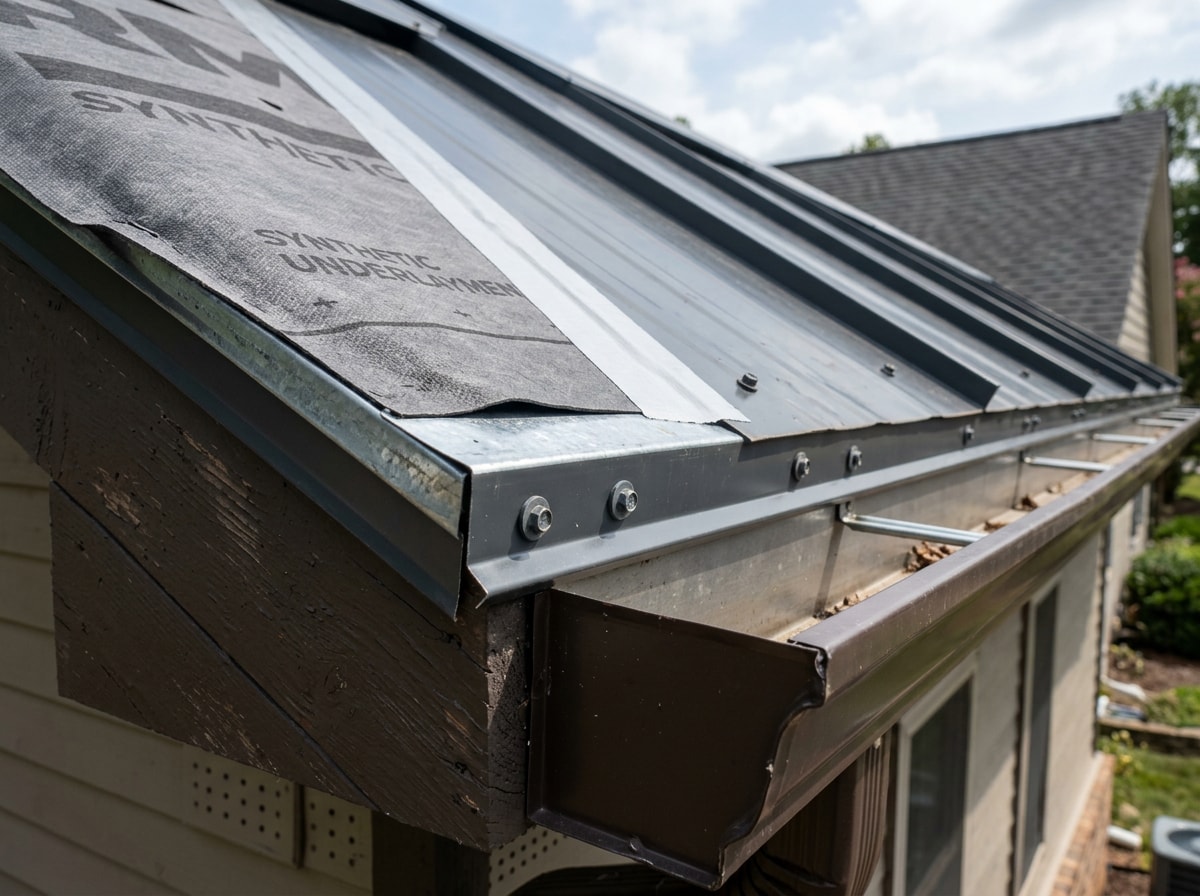
Drip edge installation follows a specific sequence depending on where it sits, and the order is intentional. At the rakes (the sloped sides of the roof), drip edge goes down first, with underlayment installed over it. At the eaves (the horizontal edge), the sequence flips: underlayment goes down first, and drip edge is fastened over the top.
This order keeps water moving downhill off the roof deck rather than finding a seam to slip under. Fastening typically uses corrosion-resistant nails or screws spaced roughly every 12 inches, with tighter spacing in high-wind areas. The edge metal then has to match the metal panel's profile closely enough that the two pieces form one continuous water path into the gutter.
Drip Edge Material Options for a Metal Roof
Material and profile choice should match the roof type and local climate, not just whatever costs the least per foot.
| Material | Cost | Strengths | Trade-offs |
|---|---|---|---|
| Aluminum | Lowest | Won't rust, lightweight, handles freeze-thaw cycling well | Softer, can dent during installation or hail |
| Galvanized/galvalume steel | Mid-range | Stiffer profile, better impact resistance, pairs well with steel panels | Heavier, slightly more expensive than aluminum |
| Copper | Highest | Long lifespan, develops a natural patina, premium appearance | Rarely practical for a standard residential retrofit |
Profiles also vary. Type C, Type D, Type F, and hemmed-edge styles each shed water differently and fit different panel systems, from standing seam to corrugated. For most Chatham homes, galvanized steel or a heavier-gauge aluminum matched to the panel type offers the best balance of cost and durability against the area's freeze-thaw winters and wind-driven spring storms.
Before & After: What Proper Drip Edge Looks Like
A roof edge detail like drip edge is easy to overlook because it's mostly out of sight from the ground. Seeing the difference up close makes clear why it matters.
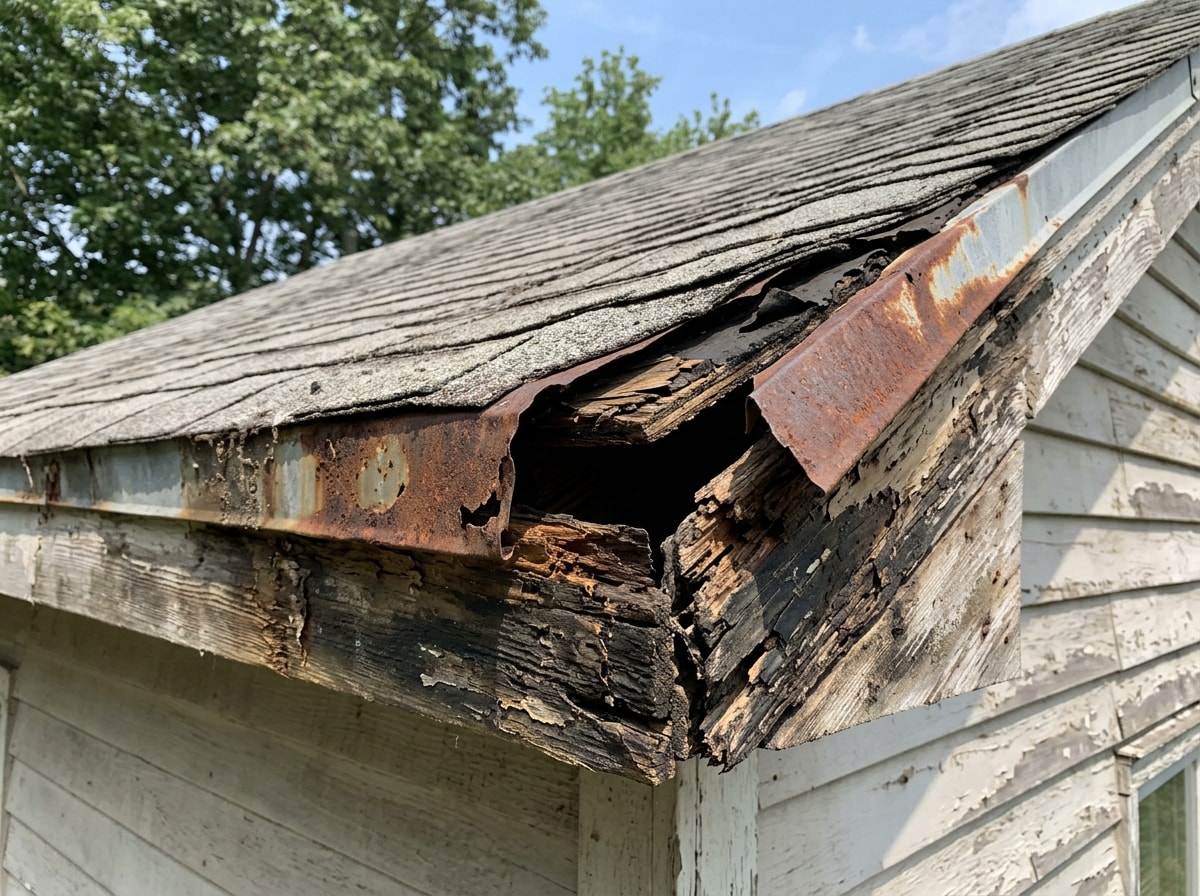
Before: an exposed deck edge with no clean metal transition, old flashing that's rusted through or pulled away from the fascia, and visible gaps where water can run behind the trim instead of into the gutter.
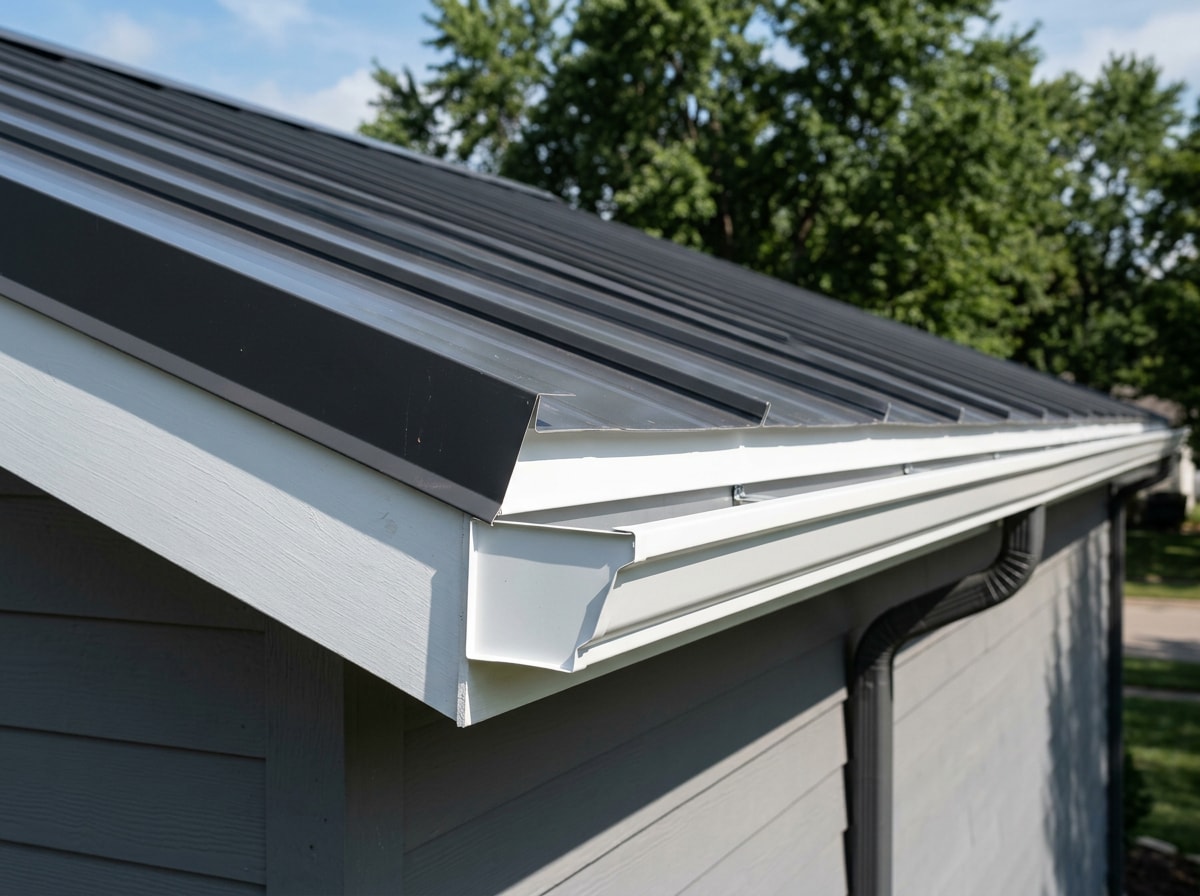
After: a clean, continuous metal line with a tight seam against the fascia board and a slight overhang directing water straight into the gutter, with no visible gap between the panel edge and trim and an even, flush fastening pattern.
Questions to Ask Before Hiring for Drip Edge Work
A short checklist saves a lot of frustration later:
- What material and gauge is being quoted, specifically?
- Is the old flashing being removed, or will new drip edge go over it?
- What's the warranty on both material and labor?
- How will the new drip edge integrate with existing gutters, and will gutter hangers or the gutter line need adjusting?
- What's the expected timeline, and does it depend on weather?
Vague answers, especially about whether old flashing is being removed, are worth pushing on further.
How Drip Edge Connects to Your Gutter System
Drip edge rarely works in isolation. Its whole job is to hand water off cleanly to the next component in line, which is almost always the gutter.
Gutter alignment. If drip edge extends too far or not far enough past the fascia, water can overshoot the gutter entirely, even when both pieces are individually in good shape. A gutter installation project is a good time to confirm that spacing is correct.
Fascia condition. Drip edge is fastened directly to or over the fascia board, so a rotted or soft fascia undermines the whole assembly no matter how good the edge metal is. Fascia installation and fascia repair work often go hand in hand with a drip edge upgrade.
Full edge replacement. When drip edge, fascia, and soffit have all aged out together, which is common on older eaves, a soffit and fascia replacement addresses the whole assembly at once instead of patching pieces separately.
We handle this kind of work for homeowners throughout Chatham, IL and the surrounding area, and it's rare to find a failed drip edge that isn't tied to a gutter or fascia issue nearby. For a closer look at how gutter sizing and warranty terms interact with a metal roof specifically, see our guide on gutters for a metal roof in Chatham, IL.
If you're weighing a full exterior refresh, our homepage has an overview of the gutter, fascia, and soffit services we provide across the area, and you can always contact us directly with photos of the problem area for a faster read on what's going on.
FAQ
Do you install drip edge before or after the underlayment?
It depends on the location. At the rake edges, drip edge goes down first and underlayment goes over it. At the eaves, the order flips: underlayment goes down first, and drip edge is fastened over the top. This keeps water flowing downhill off the roof rather than finding a seam to slip under.
Is drip edge required by code on a metal roof?
The IRC's drip edge section specifically addresses shingle roofs, but many jurisdictions apply the same requirement to other roofing types through local amendment, and most manufacturers and trade groups recommend it on metal roofs regardless of whether it's locally mandated. Skipping it can still be flagged during inspection in many areas.
What is a roofing drip edge made of?
Drip edge is most commonly aluminum, galvanized or galvalume steel, or copper. Aluminum is the lightest and most budget-friendly, steel offers more impact resistance, and copper is a premium choice mainly selected for appearance and longevity.
Is a gutter apron the same thing as drip edge?
No, though they're related. A gutter apron is a specific flashing style installed at the eave that extends further into the gutter trough, often used when replacing drip edge during a reroof without disturbing the gutters. Standard drip edge has a shorter extension and is more commonly installed with the gutters at the same time.
Can drip edge be added to an existing metal roof without removing the panels?
In many cases, yes. A technician can gently lift the lower edge of the panels enough to slide a new drip edge flange underneath, though this takes more care and time than installing it during a fresh roof job, and it only works if the existing panel edge isn't already damaged or badly corroded.
What is the best tape for sealing metal roof seams?
Butyl tape is the standard choice for sealing lapped seams on many metal roof systems since it stays flexible through temperature swings and bonds well to painted metal. That's a different detail from drip edge sealing, though. Drip edge relies on overlap, fastening pattern, and underlayment sequencing at the roof perimeter rather than a tape seal.
About This Guide
This guide was put together by the gutter and exterior crew at Central Illinois Gutters, based on service calls across Chatham, Sangamon County, and the surrounding central Illinois region. We inspect, repair, and replace drip edge as part of gutter, fascia, and soffit work on metal and shingle roofs alike, and the before-and-after patterns described above reflect what we actually see on eaves in this climate. Questions about a specific roof? Reach out through our contact page and we'll help you figure out what's going on.