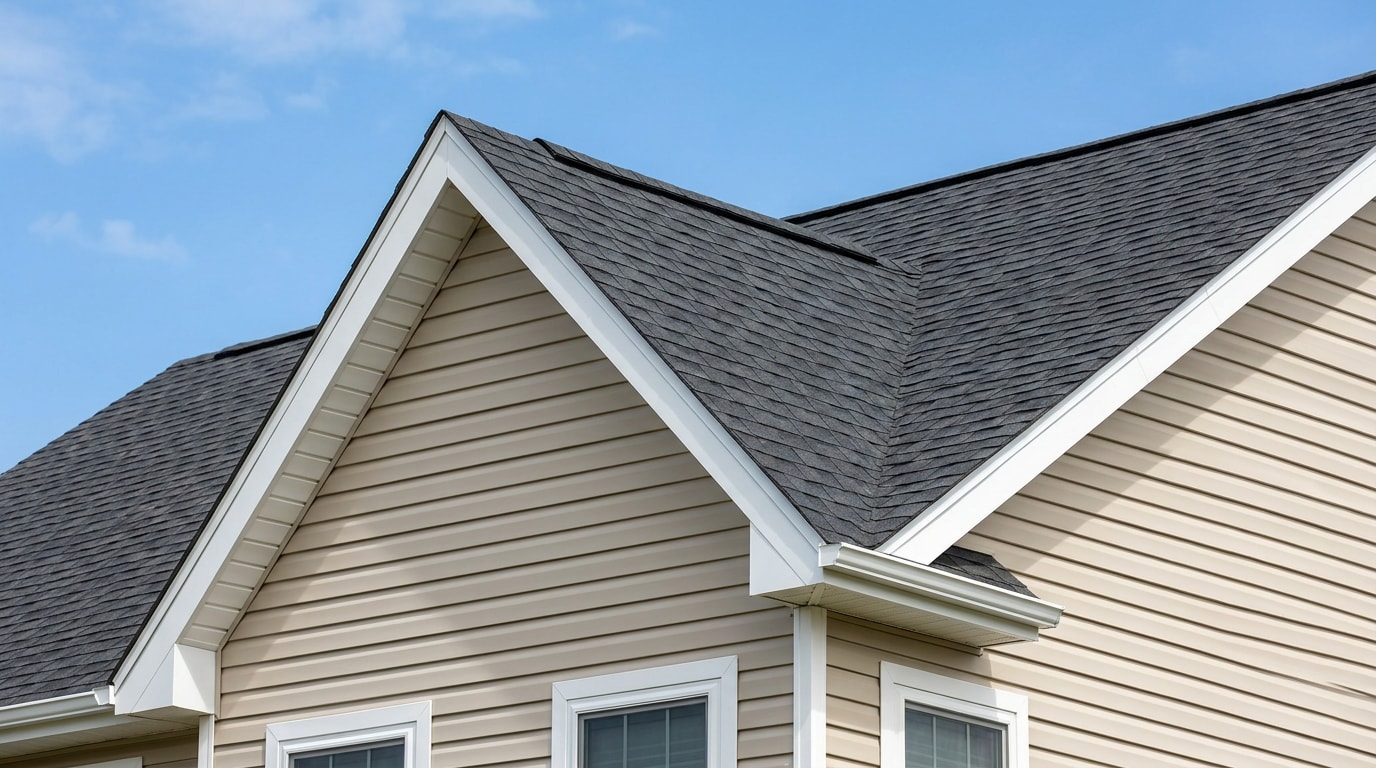
A rake in roofing is the sloped edge of a roof that runs from the eave up to the ridge along a gable end, the diagonal line that frames the triangular top of a Mechanicsburg, IL home. It's a structural edge, not a decoration, built to keep wind-driven rain and storm debris from working under your shingles. Here's what it does, how it differs from an eave, and when a damaged one needs a repair call.
Visit Central Illinois Gutters to see our services and request a free estimate.
What Is a Rake in Roofing?
Picture a gable roof like a picture frame. The horizontal bottom edge is the eave. The two angled sides climbing toward the peak are the rakes.
That's the whole definition. If your roofline looks like an "A" when you view the house from the side, the rake is that slanted line.
Don't confuse this with a "roof rake," the long-handled tool used to pull snow off a roof from the ground. We'll cover that tool near the end of this guide. The rake we're defining here is a part of the roof itself, not a piece of equipment.
Purpose of the Rake
The rake gives the sloped roof edge a finished, structurally sound line while protecting the home from wind-driven rain and debris. Without a properly built rake, water and wind can work their way under the roofing material at the gable end.
A well-built rake ties the roof deck, trim, and flashing into one protected edge. This keeps moisture from sneaking behind siding or into the attic. It also gives wind something solid to push against instead of catching under loose shingles.
Why the Rake Matters in Mechanicsburg, IL
A neglected rake edge creates real problems, not just cosmetic ones. The three most common consequences are:
- Water intrusion behind siding and trim boards
- Wind uplift that peels shingles at the gable corner
- Reduced curb appeal from peeling paint and sagging trim
Picture a gable corner with paint bubbling and a row of shingles lifting slightly at the edge. That's often a sign water has been getting behind the rake trim for more than one season before it shows from the ground. Left alone, that moisture rots the roof deck or trim boards underneath.
Wind is the other concern, and it's a real one for central Illinois roofs that see spring storm systems every year. A weak or loose rake can act like a lever that peels shingles upward during high wind. When our crews inspect storm-damaged gable ends around Mechanicsburg and the rest of Sangamon County, the rake corner is almost always where the damage starts, not the open field of the roof.
Addressing a failing rake early is almost always cheaper than waiting for rot or storm damage to force the issue. If you're noticing peeling trim or lifted shingles at a gable edge, get a free estimate before the next windstorm turns a trim repair into a deck repair.
Rake vs. Eave: What's the Difference?
A rake is the sloped edge of a roof running from eave to ridge. An eave is the horizontal edge that overhangs the walls at the low end of the roof plane. Only gable-style and similarly pitched roofs have rake edges; every roof, regardless of style, has eaves.
Flashing and drip edge are installed differently at each location, which is the part most homeowners never learn until a trim replacement goes wrong.
| Feature | Rake | Eave |
|---|---|---|
| Direction | Sloped, follows the roof pitch | Horizontal, parallel to the ground |
| Location | Gable end only, eave to ridge | Lower edge of every roof plane |
| Drip edge order | Installed over the underlayment | Installed under the underlayment |
| Gutters | Usually none | Usually holds the gutter system |
| Main weather threat | Wind-driven rain, wind uplift | Standing water, ice damming |
The International Residential Code requires a drip edge at both eaves and rake edges of shingle roofs, under Section R905.2.8.5. Section R905.2.8.5 of the IRC states that "a drip edge shall be provided at eaves and rake edges of shingle roofs." That same code section specifies that underlayment is layered on top of the drip edge at the eave, but under the drip edge at the rake. The code requires that "underlayment shall be installed over the drip edge along the eaves and under the drip edge along the rakes." That's because water at the rake moves sideways down the slope, not straight off a lower edge the way it does at the eave.
If your home has a metal roof instead of shingles, the rake edge still needs its own flashing detail. Our metal roof gutter and edge guide walks through how that detail changes with panel profile.
Rake Edge Building Codes: What Mechanicsburg Homeowners Should Know
This is the part most roofing glossaries skip, and it's worth knowing before you sign off on a re-roof or trim replacement.
National wind design standards don't treat the rake as part of one generic "roof edge." The ASCE wind load standard assigns the rake its own zone designation, separate from the ridge and eave zones. That distinction exists because wind pressure builds differently along a sloped gable edge than it does along a horizontal eave, and it's the reason a contractor should never treat rake trim and eave trim as interchangeable parts.
Illinois homeowners should also know the code landscape has shifted recently. Illinois did not have a single statewide building code, with local jurisdictions free to adopt whichever codes they chose, until a statewide building code took effect January 1, 2025 under the Capital Development Board Act. In practice, that means the drip edge and rake detailing rules in the IRC now apply more consistently across Sangamon County and surrounding communities than they did a few years ago, though local amendments can still apply.
For a homeowner, the takeaway is simple: ask any contractor quoting rake or trim work whether they're installing drip edge in the correct sequence for that specific edge. If they can't explain the eave-versus-rake difference, that's a red flag before work starts.
Rake Trim and Rake Boards
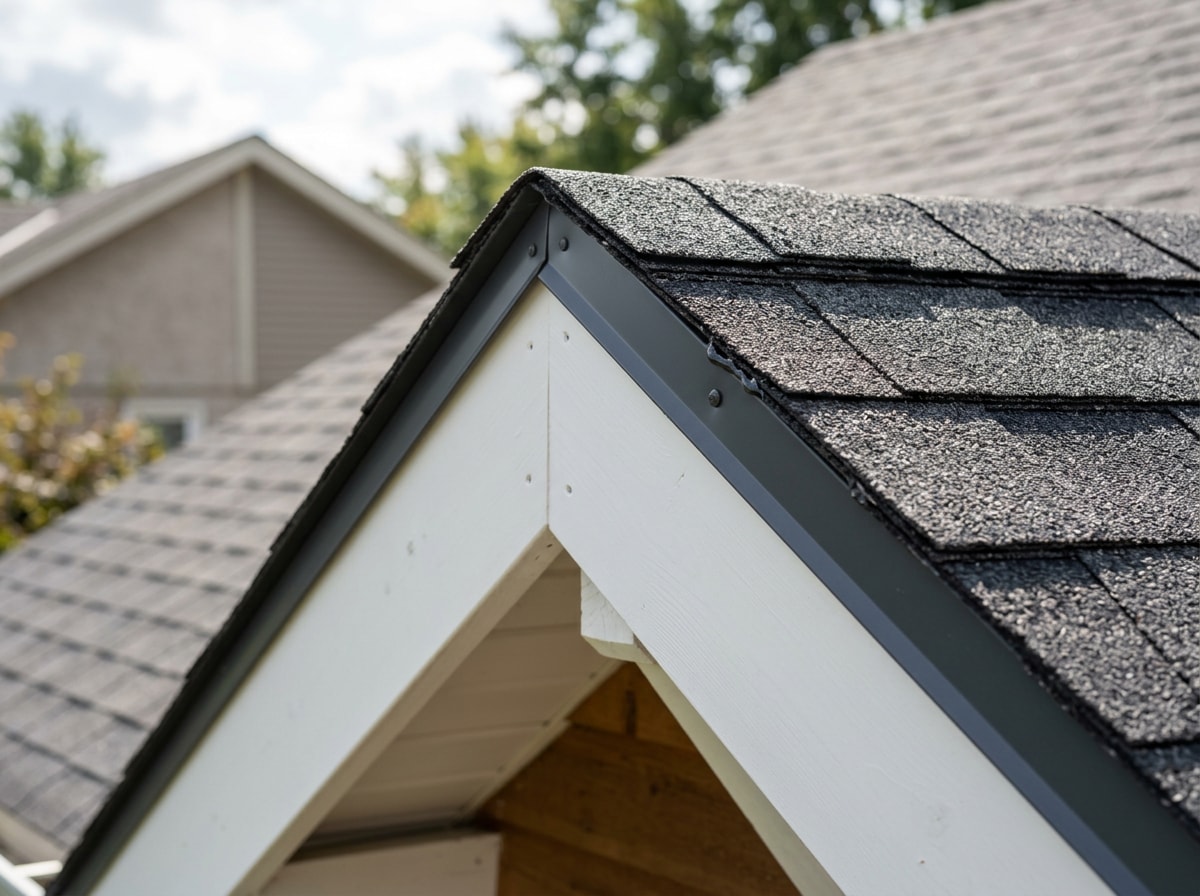
Once the rake edge is framed and sheathed, it needs trim to protect and finish it. A rake board, sometimes called a barge board, caps the exposed roof edge and works alongside flashing to shed water away from the structure.
Rake Boards vs. Fascia Boards
A rake board and a fascia board are easy to mix up, but they sit in different places and do different jobs.
| Feature | Rake Board | Fascia Board |
|---|---|---|
| Location | Sloped gable edge | Horizontal eave edge |
| Supports gutters | No | Yes, carries gutter hangers |
| Primary job | Seals and finishes the sloped edge against wind-driven rain | Backs the gutter system and caps rafter ends |
| Load | Mostly wind and water exposure | Wind, water, plus the weight of a full gutter |
Both protect the structure from weather, but fascia takes on the added job of carrying gutter hangers, so it needs to handle sustained load that a rake board never sees. If your fascia or rake boards are rotted, warped, or pulling away from the roof deck, that's a job for soffit and fascia replacement rather than a patch, since both boards need to tie back into solid wood to hold fasteners.
Using a Roof Rake Tool Safely
A roof rake tool is a long-handled device used to pull snow off a roof from the ground. Using it safely means dragging snow downward with the handle, not chipping or prying at ice.
Chipping at ice can crack shingles or flashing that's already brittle from cold temperatures. A few ground rules keep the job safer:
- Stay on the ground whenever possible instead of climbing a ladder with a rake in hand.
- Work in sections, starting near the edge and moving inward.
- Stop if you hit an ice dam that won't budge with gentle pulling.
Check the ladder rungs for ice before climbing, if a ladder is unavoidable.
Most injuries during snow removal happen during setup and takedown, not the raking itself, which is why federal workplace safety guidance discourages combining ladder work with snow raking in the first place. If ice has built up along a rake or eave edge and isn't clearing with normal raking, that's usually a sign of a drainage or ventilation problem rather than a one-time snow issue, and it's worth a gutter inspection before the next freeze-thaw cycle makes it worse.
For homeowners anywhere in the Central Illinois region, Mechanicsburg included, a rake or fascia problem rarely stays small once wind and freeze-thaw cycles get involved. Contact us for a free estimate on rake trim, fascia, or gutter repair before small damage turns into a deck replacement.
FAQ
What is a gable rake?
A gable rake is the same thing as a standard roof rake, the sloped edge running from the eave to the ridge along a gable end. The terms are used interchangeably in most roofing contexts.
What does raking mean in construction?
Outside of roofing specifically, "raking" in construction refers to any inclined or sloped edge or surface, not just on roofs. The term shows up in framing, trim work, and landscaping grading.
How do you rake a roof?
Raking a roof for snow removal means pulling snow downward with a long-handled roof rake tool from the ground, working in sections. Avoid chipping at ice, which can crack shingles or flashing.
Is a roof rake the same as a roof eave?
No. A rake is the sloped edge running from eave to ridge, while an eave is the horizontal edge at the roof's lower perimeter. They sit in different locations and handle water differently, with drip edge installed in reverse order at each one.
Can a metal roof have a rake edge?
Yes. Metal roofs have rake edges just like shingle roofs. They use purpose-made metal rake flashing or trim designed to match the panel profile and seal the sloped edge against wind and rain.
Do all roofs have a rake edge?
No. Only gable-style, A-frame, and similarly pitched roofs have rake edges. Hip roofs, which slope on all four sides, have eaves running around the entire perimeter and no rake edges at all.
Is drip edge required at the rake edge by code?
Yes. The IRC requires drip edge at both eaves and rake edges on shingle roofs, with underlayment installed over the drip edge at the eave and under it at the rake.
What's the difference between a rake and a verge?
Nothing functional. "Verge" is the term used more often outside North America, while "rake" is the common term in U.S. roofing. Both describe the same sloped gable edge.