Knowing how to turn water off to a toilet is the fastest way Central Illinois Region, IL homeowners stop a running toilet, a split supply line, or an overflow before it soaks the bathroom floor. Most toilets shut off in under 30 seconds once you find the right valve. This guide covers the toilet's own shutoff, the whole-house main valve as a backup, and what to do when either one won't budge.
Quick Answer: 3 Steps to Shut Off Toilet Water
- Find the small oval, round, or lever valve on the wall or floor behind the toilet tank.
- Turn it clockwise: a quarter turn for lever-style valves, several full turns for round ones.
- Flush the toilet. If the tank stays empty, the water is off.
If that valve is missing, frozen, or doesn't fully stop the flow, skip ahead to the main shutoff section below.
Where the Toilet Shutoff Valve Is Located
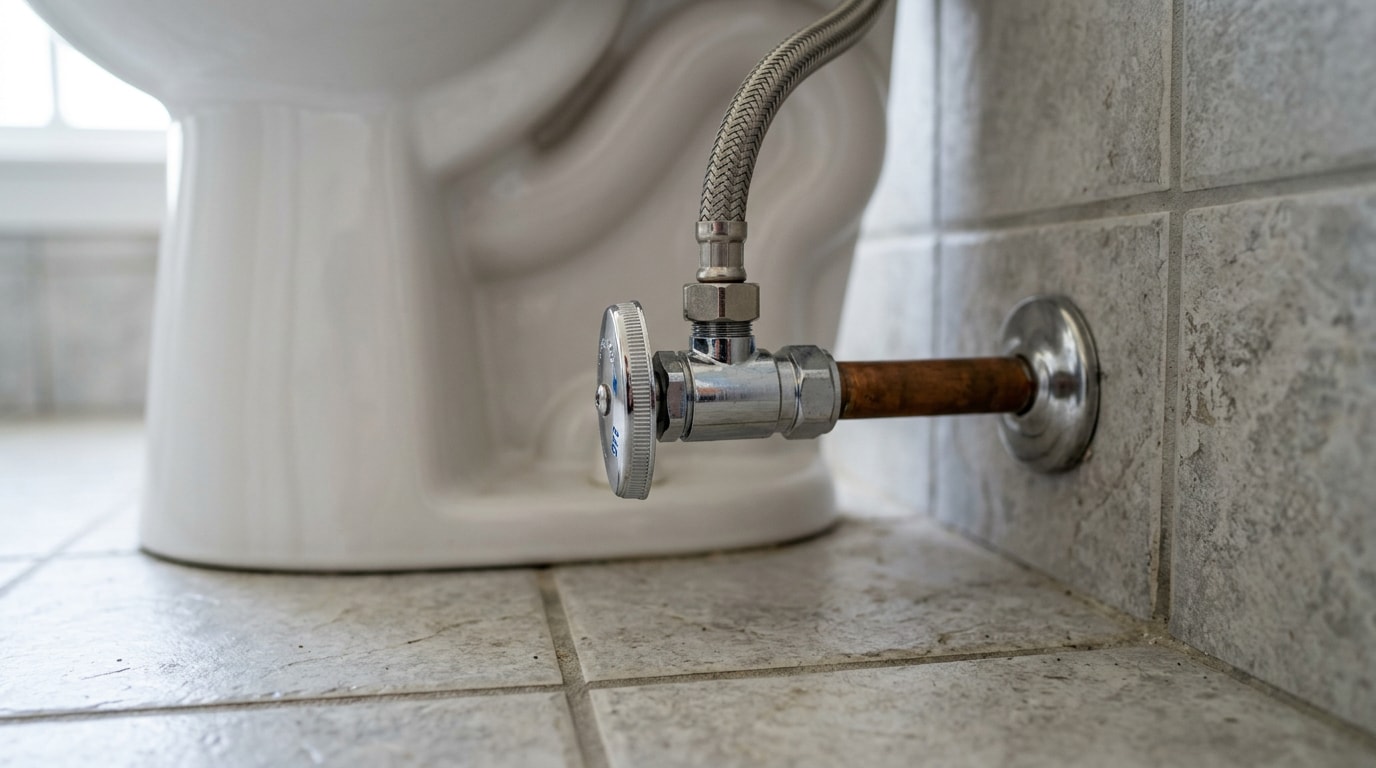
The valve almost always sits low, either on the wall or coming up through the floor on one side of the toilet, connected to the flexible supply line that feeds the tank. It's a small fixture, not a full-size pipe fitting, so it's easy to overlook if you're not looking directly behind the bowl.
In older Central Illinois Region, IL homes, the valve is sometimes tucked into a recessed wall box or set vertically into the floor instead of mounted on the wall. If you don't see it right away, check behind a nearby access panel before assuming your toilet doesn't have one.
| Valve type | How to identify it | How to close it |
|---|---|---|
| Quarter-turn (ball) valve | Single lever handle, common in newer or remodeled bathrooms | Turn the lever 90 degrees until it sits perpendicular to the pipe |
| Multi-turn (gate/globe) valve | Round or oval knob, common in homes built before the 1990s | Turn clockwise through several full rotations until it stops |
Both types follow the same rule: clockwise closes, counterclockwise opens.
Step-by-Step: Closing the Toilet's Shutoff Valve
- Locate the valve directly behind or beside the toilet base.
- Turn it clockwise. A ball valve needs one firm quarter turn. A gate or globe valve usually needs three to five full turns before it stops moving.
- Flush the toilet. The tank should drain and stay empty, with no trickling or refill sound.
- Check the connection point for drips while the valve is closed. Moisture here can mean a worn washer even though the water is technically shut off.
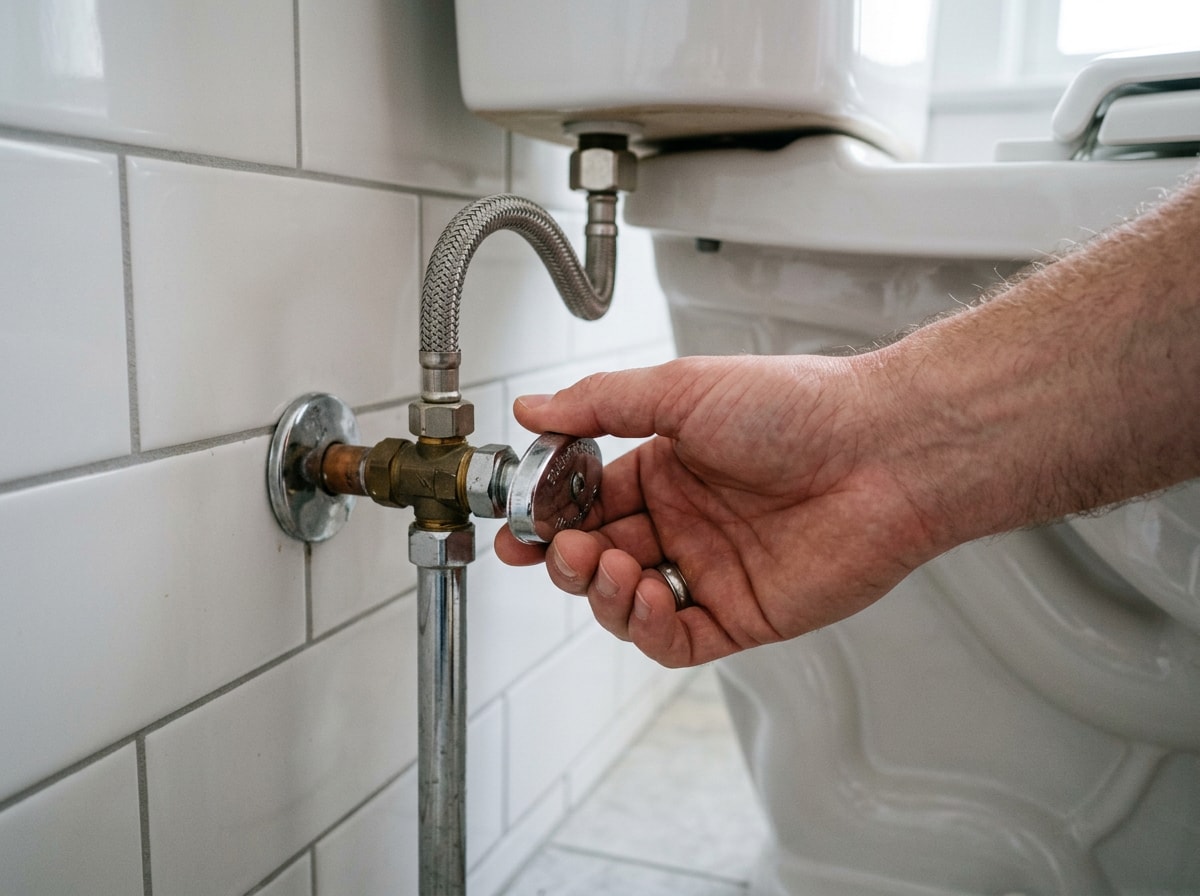
If the tank starts refilling a minute or two after flushing, the valve isn't sealing all the way. Close it further, or treat it as a sign the valve needs replacing.
No Valve, or It Won't Turn? Use the Main Shutoff
Some older toilets, especially in homes that predate modern plumbing code updates, were never fitted with an individual shutoff. When that's the case, or when the fixture valve is corroded stuck, the home's main shutoff valve is the reliable fallback.
Finding and closing the main valve
The main shutoff is typically in the basement, crawlspace, or utility room, often near the water heater or along the foundation wall closest to the street. Because most homes across the Central Illinois Region have basements, this search is usually more straightforward than in homes built on a slab. Turn it clockwise until it stops, then open a nearby faucet to confirm the whole-house supply has actually stopped.
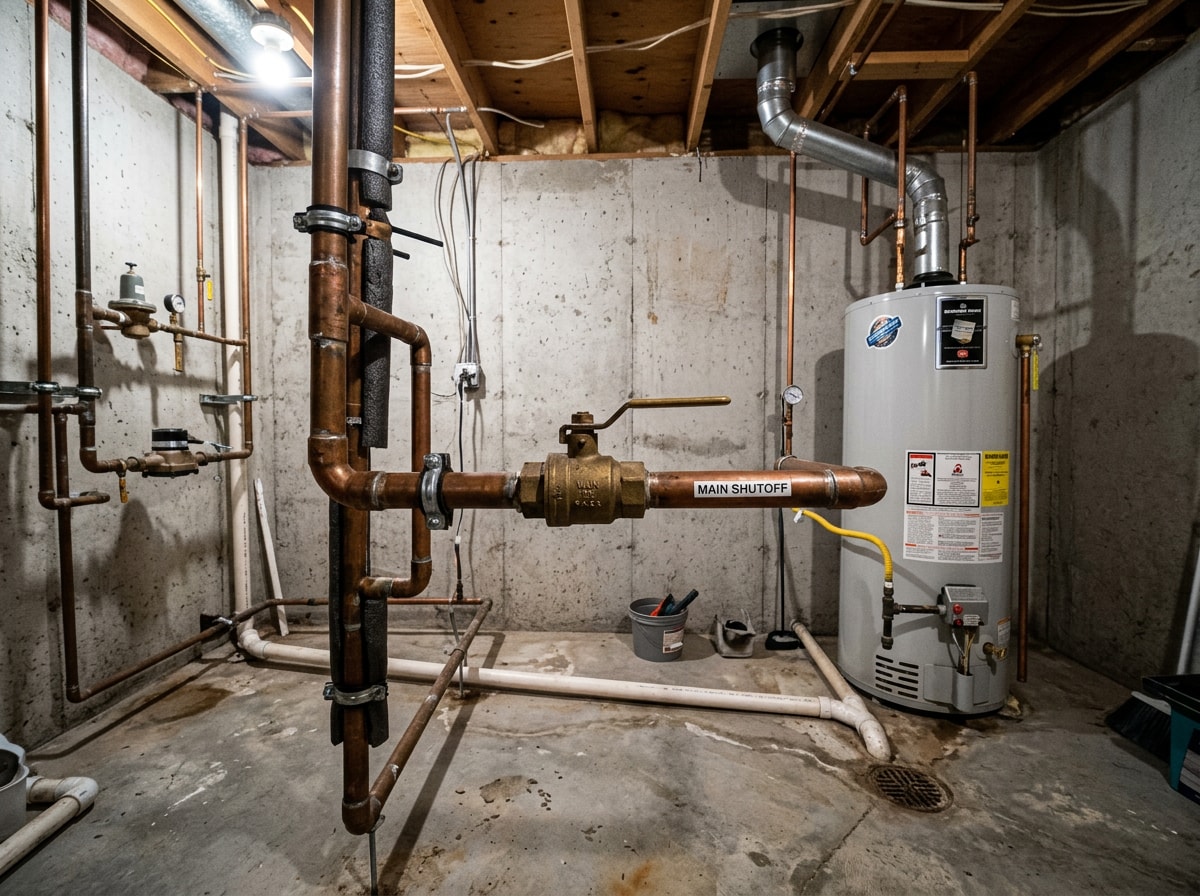
This cuts water to every fixture in the house, not just the toilet, so treat it as a backup rather than the first move.
If the valve won't turn
A stuck valve is common wherever mineral deposits build up on the stem over years of sitting untouched. Spray a penetrating lubricant where the stem meets the valve body, wait a few minutes, then try again with steady, gentle pressure. Avoid reaching for a pipe wrench to force it: excess torque on an aging valve body can crack the stem and turn a stuck valve into an active leak instead of fixing the problem. If lubricant and gentle pressure don't free it, the valve has likely corroded internally and needs a licensed plumber to replace it.
Why This Matters More in Central Illinois Region Homes
Two local factors make this more than a generic homeowner tip here.
First, plumbing code isn't optional on this one. Shutoff valves are required on the fixture supply to each plumbing fixture other than bathtubs and showers in one- and two-family homes, under the International Plumbing Code. If your toilet is missing one entirely, that's worth flagging to a plumber the next time repairs come up, not just working around with the main valve indefinitely.
Second, hard water accelerates valve failure. Almost all of Illinois has hard or very hard water, which means the water contains a high degree of calcium and magnesium mineral ions , and the University of Illinois Extension Office tracks the ranges that put most of the state in the "hard" to "very hard" category . That mineral content is exactly what seizes up an old gate valve's stem over time, which is why older homes in Springfield, Sangamon County, and Chatham tend to have stiffer valves than newer construction elsewhere.
Test Your Valves Before Winter
Central Illinois winters bring hard freezes that can crack a pipe or fitting that's already weakened by corrosion, and a shutoff valve you've never touched is the worst time to discover it's seized. State emergency-preparedness guidance recommends knowing your main shutoff location and being ready to close it immediately if a pipe freezes or bursts, rather than searching for it mid-emergency. Open and close both your toilet valve and your main valve once a year, ideally before the first hard freeze, so you know they'll actually work when you need them.
A running toilet left unchecked adds up fast, too. Household leaks can waste nearly 1 trillion gallons of water annually nationwide , and a silently running toilet is one of the most common culprits.
Tools That Make the Job Easier
You usually don't need anything beyond your hands, but having these nearby saves a second trip to the garage:
- Adjustable wrench or pliers for a stubborn valve
- Rag or towel to catch drips
- Small bucket or sponge
- Flashlight for dim corners behind the toilet
- Penetrating lubricant for a valve that hasn't moved in years
When to Call a Licensed Plumber
Call a plumber instead of forcing the issue if:
- The valve won't close all the way no matter how far you turn it
- Water keeps dripping from the valve body itself after it's closed
- The tank keeps refilling after a flush test, even with the valve shut
- You're dealing with active flooding and can't find a working shutoff anywhere
These signs usually point to internal corrosion or a failing valve seat, not something a little more elbow grease will fix. If that's where you are, get a free estimate from a local plumber who can replace the valve and check the supply line while they're at it. For more on matching the right supply line to your fixture, see our toilet supply line size guide for the Central Illinois Region.
Homeowners across Springfield, Sangamon County, and Chatham deal with the same mix of aging valves and hard water, so if your valve looks original to the house, it's worth having it inspected before it fails on its own schedule. Visit our homepage for more Central Illinois Region plumbing resources.
FAQ
Why would I need to turn off the water to my toilet?
Most homeowners shut off toilet water before replacing a flapper or fill valve, fixing a running toilet, stopping an overflow, or repairing a leak at the base or supply line. Shutting off the water first keeps a simple repair from turning into a bigger mess.
How do I turn off the water supply to my toilet?
Locate the oval or lever-shaped valve behind the toilet base, then turn it clockwise, a quarter turn for ball valves, several rotations for older gate valves, until it stops. Flush to confirm the tank doesn't refill, which means the water is fully off.
What should I do if I cannot find the shutoff valve?
Some older toilets were installed without a dedicated shutoff valve. If that's the case, use the home's main water shutoff valve instead, usually located in the basement or utility room, to stop water to the entire house until a plumber can install a proper toilet valve.
How often should I test the toilet's shutoff valve and the main shutoff valve?
Test both once a year, ideally before winter. Turning them off and back on keeps mineral deposits from sealing them shut, so they'll actually work in an emergency instead of fighting you when you need them most.
Can I turn off the water at the curb or street valve myself?
Stick to the toilet valve or your home's main interior shutoff. The curb stop belongs to the water utility in most municipalities, and operating it without authorization can cause damage or run against local utility rules. Call your water provider if the issue is upstream of your main shutoff.
How do I know if my shutoff valve needs to be replaced instead of just closed?
If it won't turn without excessive force, weeps water around the stem when closed, or doesn't fully stop flow after multiple attempts, the internal seal has likely failed. At that point, a licensed plumber can replace the valve rather than risk cracking it under pressure.