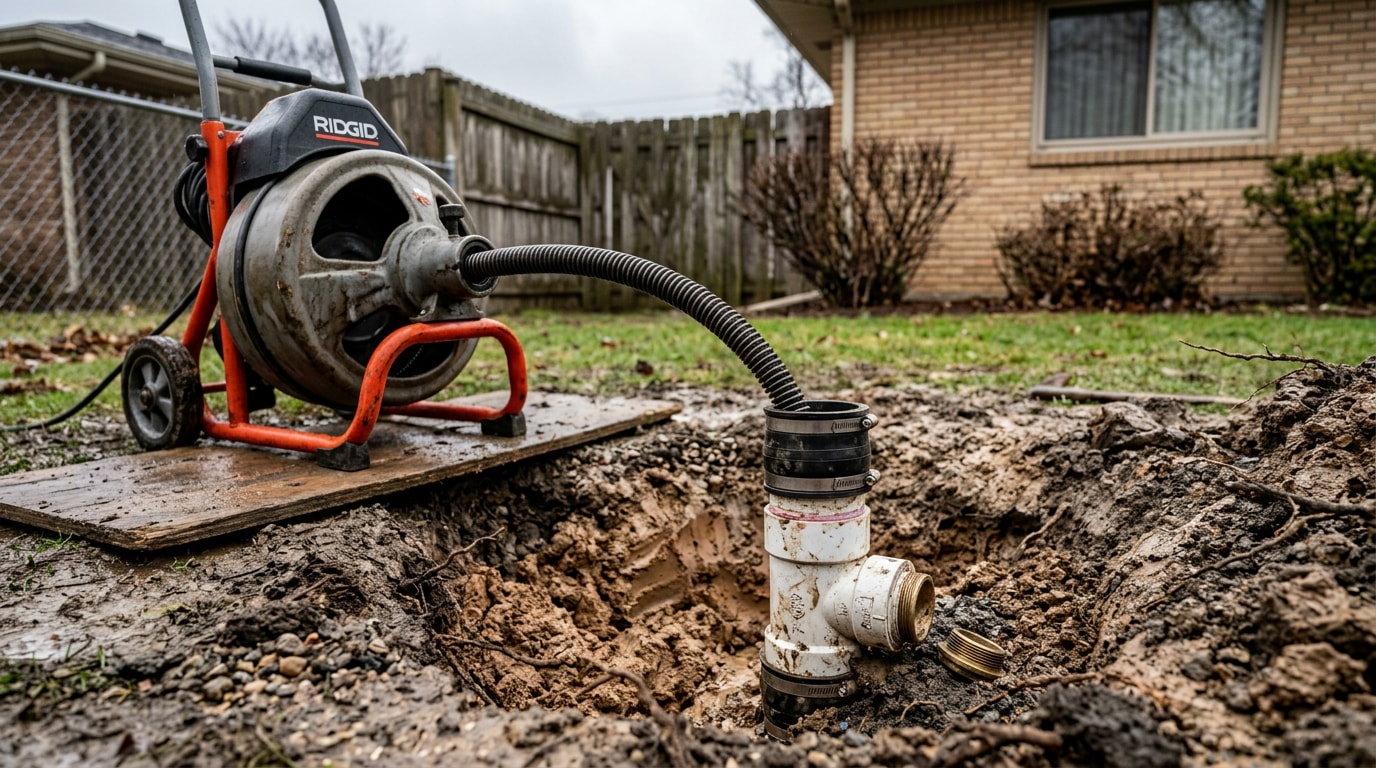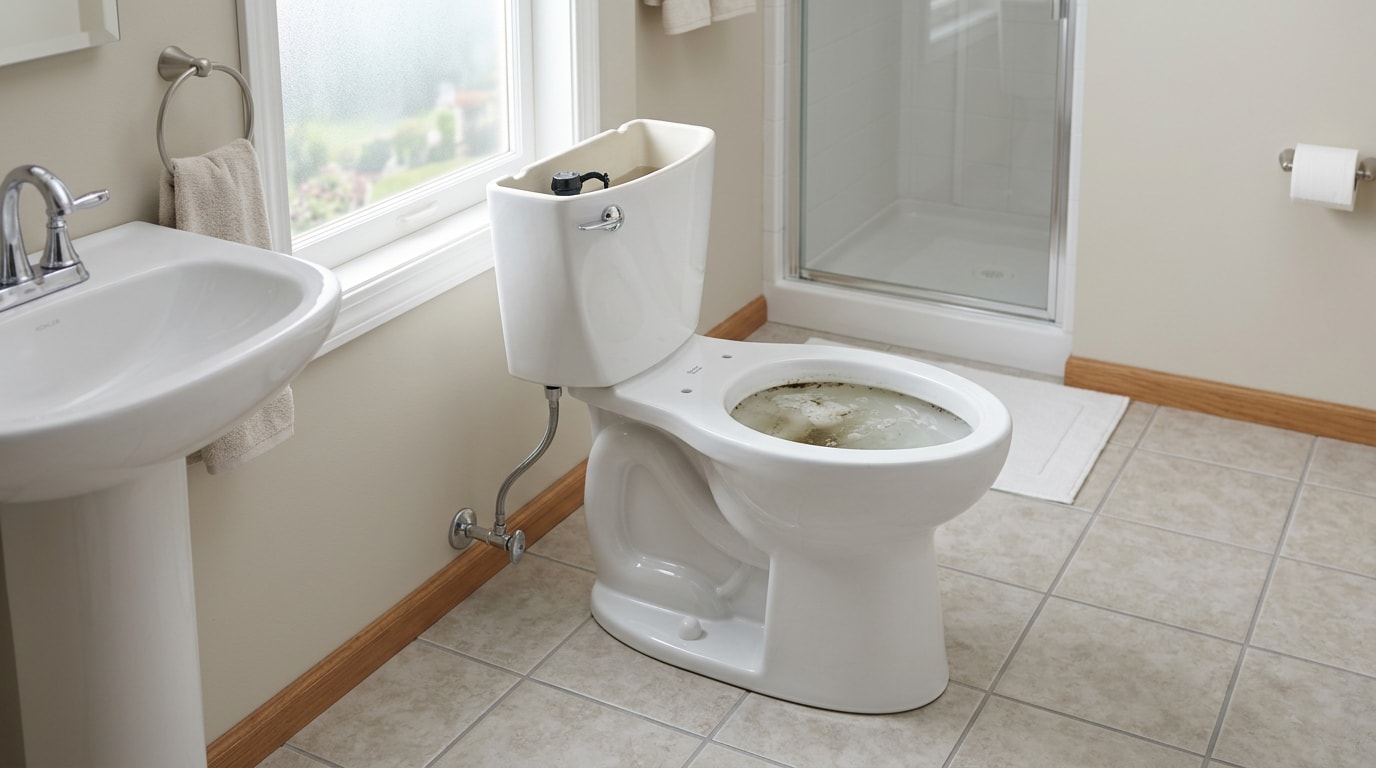
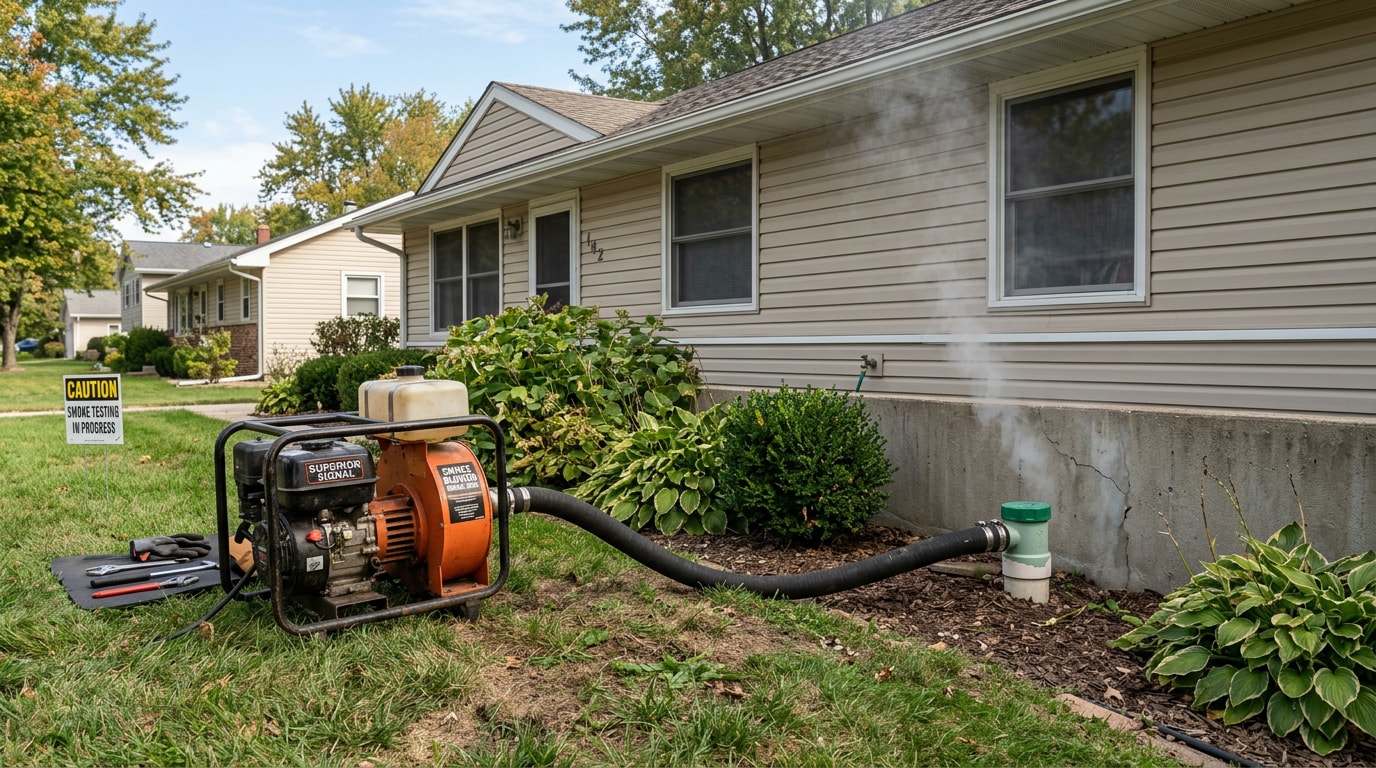
Smoke test plumbing in Chatham, IL traces hidden sewer gas leaks and cracked drain lines without digging up your yard. If you've noticed a rotten-egg smell near a floor drain or damp soil by the foundation, a smoke test usually finds the source in a single visit. Here's how the process works, what it costs, and when a camera or backflow test is the better tool instead.
What Is a Smoke Test in Plumbing?
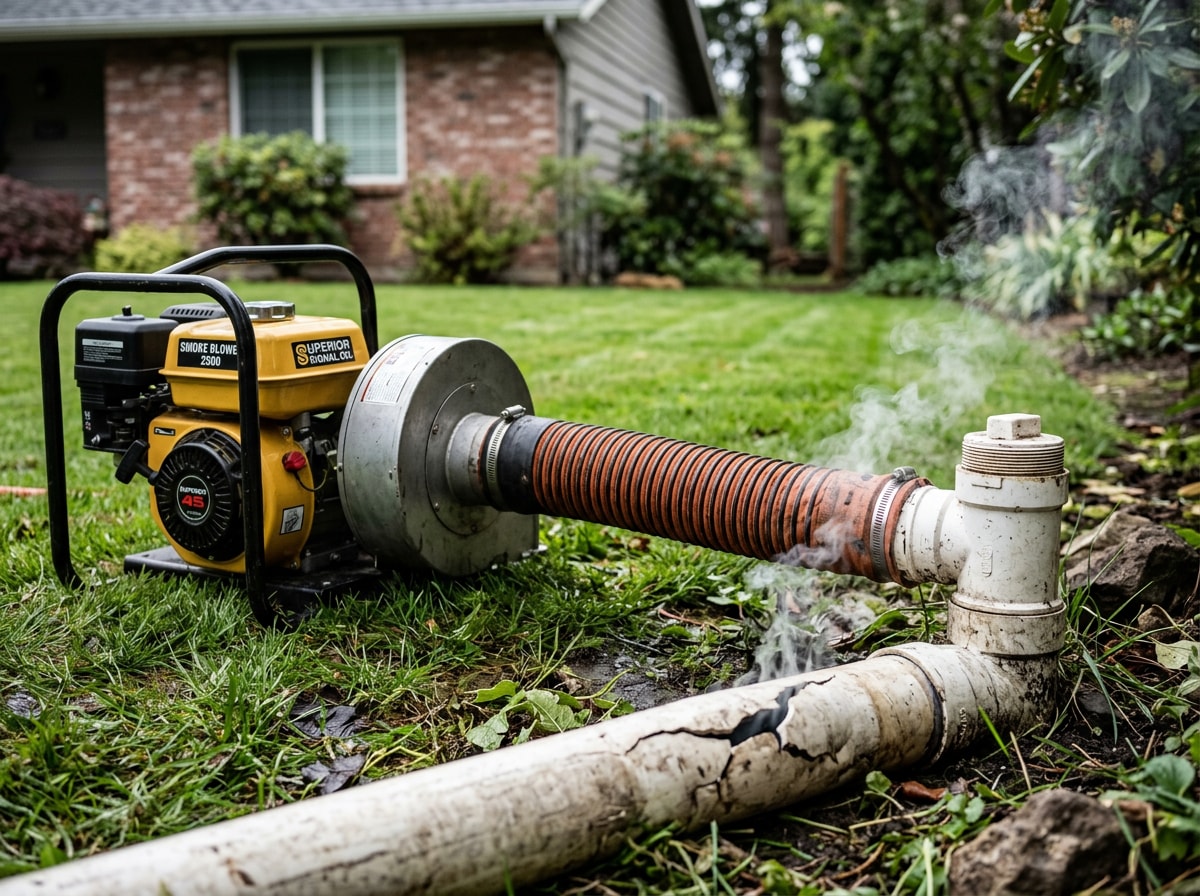
A smoke test pushes non-toxic, manufactured smoke into a home's drain or vent system, then tracks where that smoke escapes above ground or indoors. Any smoke showing up at a foundation crack, a roof vent gap, or a basement floor drain marks a point of failure in the pipe.
Smoke testing has been recommended by the EPA as a great way to identify problems in the wastewater system , and the smoke manufactured specifically for testing is EPA endorsed, and is a non-toxic, non-staining substance that is generally considered to be harmless to humans, pets, food, and material items .
Here's the general sequence a technician follows:
- Plug drain traps and fixture openings except the main vent stack to keep smoke contained in the pipe network.
- Introduce smoke through a blower connected to a cleanout or vent access point.
- Walk the property, inside and out, watching for smoke emerging from unexpected locations.
- Document each exit point with photos and notes to map out needed repairs.
In the smoke tests we've run across Chatham basements and crawl spaces, a dried-out floor drain trap turns out to be the single most common source of sewer gas odor, not a cracked main line. It is important to locate dry traps as they could allow sewer gases to enter the home, and dry traps are most commonly found in basement floor drains that are used only during rare flood events or in unused fixtures.
Signs You Need a Smoke Test in Chatham, IL
Not every plumbing issue calls for a smoke test, but a few warning signs point directly to it:
- Sewer gas odor indoors. A rotten-egg or mildew smell is one of the clearest triggers for a smoke test.
- Unexplained water pooling. Standing water near a sewer cleanout or foundation line, unrelated to recent rain, often signals a broken drain or sewer pipe underground.
- Slow drains with no obvious clog. If snaking a drain doesn't fix it, the problem may be farther down the line.
- A sudden spike in your water bill. This is more often tied to a supply-line leak than a sewer issue, but it's worth ruling out as part of a full diagnostic visit.
If any of these sound familiar, get a free estimate and a technician will walk you through next steps before any work starts.
Smoke Testing vs. Camera Inspection vs. Acoustic Leak Detection
Technicians pick a detection method based on what they're looking for and what kind of pipe is involved. Air testing and hydrostatic testing are used to identify leaks in the sewer system, while smoke testing is used to determine connectivity and to identify points where inflow to the sewer system can occur.
| Method | Best For | How It Works | Typical Use |
|---|---|---|---|
| Smoke test | Drain, vent, and sewer lines | Non-toxic smoke traced to exit points above ground | Odor complaints, cross-connections, dry traps |
| Camera inspection | Interior pipe condition | Flexible camera fed through the pipe | Confirming cracks, root intrusion, corrosion |
| Acoustic leak detection | Pressurized water supply lines | Ground microphones listen for escaping water | Supply-line leaks between meter and house |
Camera inspection shows the physical condition of a pipe from the inside, while smoke testing is faster and cheaper for finding where air and sewer gas are escaping the system. Many Chatham jobs use both: smoke testing to find the general problem area, then a camera to confirm it before repair starts. Our plumbing drain repair guide for Sangamon County covers how these diagnostics tie into actual repair work and costs.
The nature of smoke testing inspections is to confirm system connectivity, identify gravity sewer system defects that allow inflow and infiltration, assist in locating cross-connections between storm and sanitary sewer, and locate the source of odor complaints, but smoke testing is one of the tools available for evaluating sanitary sewers and should not be considered the only test necessary to evaluate a collection system. That's exactly why pairing it with a camera run matters on tougher jobs.
Where Smoke Testing Works and Where It Doesn't
Sewer and drain lines are the primary use case for smoke testing because these pipes aren't pressurized, which makes smoke the easiest tracer to use. Illegal cross-connections, like a sump pump or downspout tied improperly into a sanitary sewer line, also show up clearly during a smoke test since smoke escapes from any point where the system isn't sealed correctly.
Smoke testing isn't the right tool for pressurized water supply lines. Because supply lines stay full of water under pressure, smoke can't travel through them the way it does through an empty drain or vent pipe. For water-line leaks, plumbers generally use acoustic listening devices or ground microphones that pick up the sound of water escaping underground instead.
If a Chatham homeowner suspects both a supply-line issue and a sewer or drain problem, a technician will usually recommend two separate diagnostic approaches rather than relying on one test for both.
Backflow Testing: A Different Plumbing Test Entirely
Backflow testing checks whether a backflow prevention device is still stopping contaminated water from flowing backward into the clean water supply. It's a completely different test from smoke testing. Backflow testing uses pressure gauges on an installed device, while smoke testing traces air through drain and vent piping.
Illinois properties with irrigation systems, fire sprinklers, and certain commercial connections are generally required to have backflow devices tested on a regular schedule. Industries or facilities installing or possessing backflow prevention devices must have those devices inspected and tested at the time of installation and at least annually thereafter, with verification of inspection submitted to community public water supply officials. Requirements can vary by local water utility, so confirm the specific schedule for a Chatham address through the Illinois EPA's cross-connection control program.
Not just any plumber can run this test, either. Only licensed plumbing contractors certified as Illinois Cross-Connection Control Device Inspectors (CCCDI) can test a backflow device or assembly. Skipping required testing can lead to code violations or water service issues down the line.
Smoke Test Plumbing Cost in Chatham, IL
Smoke test cost in Chatham depends on a handful of factors homeowners can check before calling for a quote:
- Property size and pipe length — longer drain and sewer runs take more smoke and more time to trace.
- Number of access points — homes with limited cleanouts may need extra setup work.
- Accessibility — finished basements or landscaping over sewer lines can add time.
- Combined services — pairing a smoke test with a camera inspection costs more upfront but often avoids a repeat visit.
- Follow-up repair needs — the smoke test itself is priced separately from any crack or connection repair found during the test.
Leak detection pricing in the Chatham area typically falls into a moderate range for a standard single-family home, with larger or harder-to-access properties running higher. Getting an itemized, written quote before work begins is the best way to avoid surprises. Our guide to free plumbing estimates in Sangamon County breaks down what a complete written quote should include.
Licensed, Code-Compliant Service in Chatham
Plumbing diagnostics, including smoke and backflow testing, should only be performed by a licensed plumber. In Illinois, that license comes from the state health department, not a general contractor registry. The Illinois Department of Public Health regulates plumbers and the plumbing trade by maintaining a minimum code of standards for plumbing practices, and individuals who plan, inspect, install, alter, extend, repair, and maintain plumbing systems in the state must be licensed.
To obtain a license, individuals must pass a state licensing exam after working under a licensed plumber as a licensed apprentice for a 48 to 72 month period.
That's a longer apprenticeship than most homeowners expect, and it's worth confirming before letting anyone touch your drain or vent system. You can review current requirements directly through the Illinois Department of Public Health's plumbing program.
A smoke test often uncovers issues tied directly to Illinois plumbing code, particularly around cross-connections and vent requirements. For technical background on how smoke testing fits into broader pipeline evaluation standards, see NASSCO's smoke testing specification guideline, the national standard referenced by municipal and residential inspectors alike. This guide was reviewed by a licensed Illinois plumbing contractor on our team who has run smoke and camera inspections across Chatham and greater Sangamon County homes for more than a decade.
Scheduling a Smoke Test in Chatham: What to Expect
- Tell us about your job. A quick call covers the symptoms you're noticing, your address, and any access details, like a crawl space or locked gate.
- Get a free, written quote. You'll get an estimate based on what you described before any work starts, so there's no guessing about cost.
- Same-day dispatch, when possible. Most Chatham-area smoke test and leak detection visits can be scheduled quickly, especially when symptoms like sewer gas odor suggest an active issue.
- Review the findings together. After the test, the technician walks through what was found, showing exactly where smoke escaped or what the camera revealed, before discussing next steps.
Ready to get this scheduled? Request a free estimate and a Chatham-area technician will confirm availability the same day in most cases.
Chatham & Sangamon County Service Area
Service covers the primary Chatham, IL ZIP codes, including 62629, along with surrounding addresses just outside the village limits. Confirming your ZIP code during scheduling helps dispatch the right crew size for your job. See our Chatham, IL area page for more on local coverage.
Beyond Chatham itself, coverage extends to nearby Sangamon County communities, including Springfield, Rochester, Auburn, and Glenarm. Many of these communities share similar sewer infrastructure, so the same smoke-testing approach applies across the Central Illinois region. For general home service info and other guides, visit our homepage.
FAQ
Is Backflow Testing Required in Illinois?
Many Illinois properties with backflow prevention devices, particularly those with irrigation systems or certain commercial connections, are required to test those devices annually under local cross-connection control programs. Requirements can vary by water utility, so confirming with your local provider is the right first step.
Is Smoke Testing Safe for My Family and Pets?
Yes. The smoke used is manufactured specifically for plumbing diagnostics and is non-toxic and non-staining. People with respiratory issues and pets are sometimes asked to step outside briefly during testing as a precaution, but the smoke clears within minutes.
How Long Does a Smoke Test Take?
Most single-family home smoke tests are completed in a single visit, often within a few hours depending on property size, number of access points, and how many areas need to be traced.
How Fast Can You Schedule a Smoke Test in Chatham?
Most smoke test and camera inspection requests in Chatham can be scheduled the same day or within 24 hours, depending on the technician's current route and the urgency described during intake.
How Much Does Smoke Test Plumbing Cost in Chatham, IL?
Costs vary based on property size, access, and whether a camera inspection is added to the smoke test, but a written quote is always provided before work begins so there are no surprise charges.
What's Included in a Typical Service Call?
A standard visit includes the diagnostic test itself, a walkthrough of findings with photos or video, and a written summary outlining any recommended repairs and their estimated cost.
Is There a Warranty on Repairs?
Repair work completed after a smoke test or inspection is typically backed by a workmanship warranty, though exact terms depend on the scope of the job. Ask for warranty details in writing as part of your quote.
Still smelling sewer gas or seeing damp spots you can't explain? Request a free quote and a Chatham-area technician will walk you through next steps.