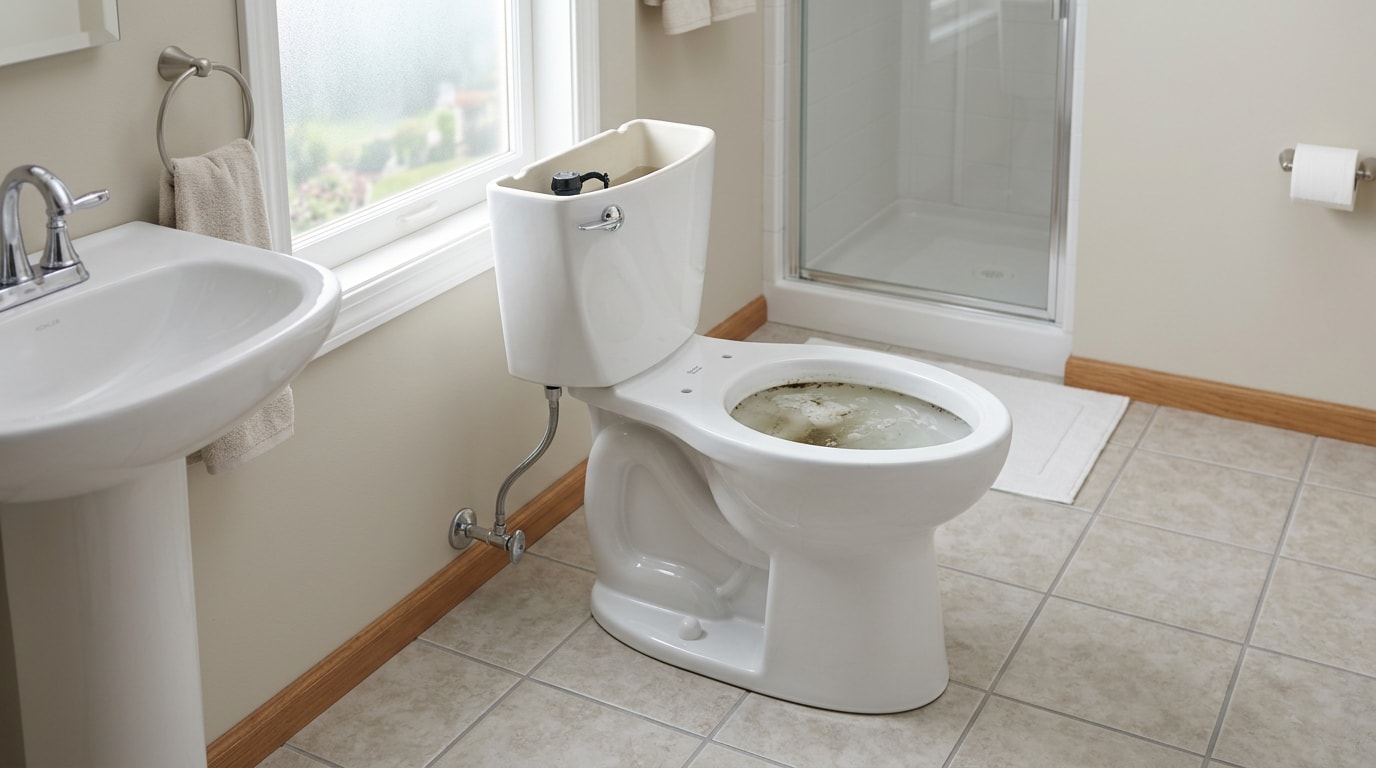
Your toilet won't flush and water rises toward the rim in Springfield, IL almost always because a clog is sitting somewhere between the trap and the sewer line, not because the toilet itself is broken. Stop flushing the second the bowl climbs high. The next few minutes decide whether this stays a five-minute fix or turns into standing water on your bathroom floor.
Stop Flushing the Moment the Bowl Starts Rising
Do not press the handle again if water is climbing toward the rim. Each extra flush adds more water on top of water that already has nowhere to drain.
If the level gets close to the rim:
- Locate the shutoff valve on the wall or floor behind the toilet, on the supply line.
- Turn it clockwise until it stops.
- Let the bowl settle for a minute before you touch anything else.
Closing that valve buys you time to figure out the real problem instead of racing a flooded floor.
What Your Flush Is Telling You
The way the water behaves points straight at the likely cause. Use this table before you grab any tool.
| What Happens | Check First | Likely Area |
|---|---|---|
| Bowl rises fast, almost to the rim, within seconds | Shut off water supply immediately | Trapway or branch drain |
| Bowl rises, then slowly drains on its own over a minute or two | Monitor, then plunge | Partial blockage further down the line |
| Flush is weak or water never rises at all | Check tank water level | Flapper or fill valve |
| Toilet gurgles, or other drains bubble when you flush | Listen for sounds in nearby fixtures | Plumbing vent or main line |
Toilet Won't Flush and Water Rises? Here's the Likely Cause
A toilet that won't flush while water rises instead of draining almost always has a clog, it's just hiding somewhere you can't see. The blockage might sit in the toilet's built-in trap, further down the branch drain, or out in the main sewer line serving the house.
A bowl that rises and then slowly drains on its own after a minute or two points to a partial clog. A bowl that stays high with zero drainage means a fuller blockage, and that's the point where repeated plunging stops being useful.
Across the calls we run in Springfield, Chatham, and the rest of Sangamon County, the pattern is pretty consistent: older homes with original clay or cast-iron drain lines tend to show the slow-creep rise as the pipe narrows over years, while newer homes are more likely to show an instant rise from one object lodged in the trap.
If a toilet keeps rising and draining in cycles after every flush rather than clearing for good, that's a related but distinct problem worth reading up on in our guide on toilet keeps overflowing after flush.
Could a Blocked Plumbing Vent Be the Real Problem?
Most rising-water toilets point to a clog, but not all of them do. If the bowl gurgles, bubbles, or rises slightly and settles while a nearby sink or tub also gurgles when you flush, a blocked plumbing vent could be the actual cause.
Vents let air into the drain system so waste can flow out smoothly. Model plumbing codes require that venting keep the pressure on a fixture trap from swinging more than 1 inch of water column, which is exactly why a blocked vent can mimic a clog's symptoms even when the drain line itself is clear. The International Residential Code's venting chapter spells out why every trap needs that protection.
Outside, roof vent pipes get blocked by leaves, bird nests, or ice in a hard Illinois winter. Inside, the symptom looks almost identical to a trap clog, which is why DIY plunging sometimes does nothing even after several honest attempts. If plunging and a toilet auger both fail to clear a rising bowl, a vent problem is worth ruling out before you keep spending time on the trap.
How a Normal Flush Is Supposed to Work
A standard flush relies on gravity and a sealed trap creating a temporary siphon. Water drops fast from the tank, fills the bowl's trapway, pushes out trapped air, and the rushing water pulls the bowl's contents down and out. MIT's engineering breakdown of toilet siphon mechanics walks through exactly how that pressure difference does the work, not gravity alone.
Once air re-enters the trap, the siphon breaks and the bowl refills with a small amount of standing water. That's normal.
Basements and below-grade bathrooms often skip this system entirely. Those fixtures typically rely on an up-flush system that grinds and pumps waste upward to reach the main drain, since gravity can't pull it down from below ground level.
Ruling Out a Weak Flush: Tank Water Level and Flapper
These next two issues cause a weak or missing flush, not a rising bowl, so don't waste time plunging if this is what you find.
Pop the tank lid and check the water line. It should sit about an inch below the top of the overflow tube. Noticeably lower, and the tank isn't holding enough water for a full flush.
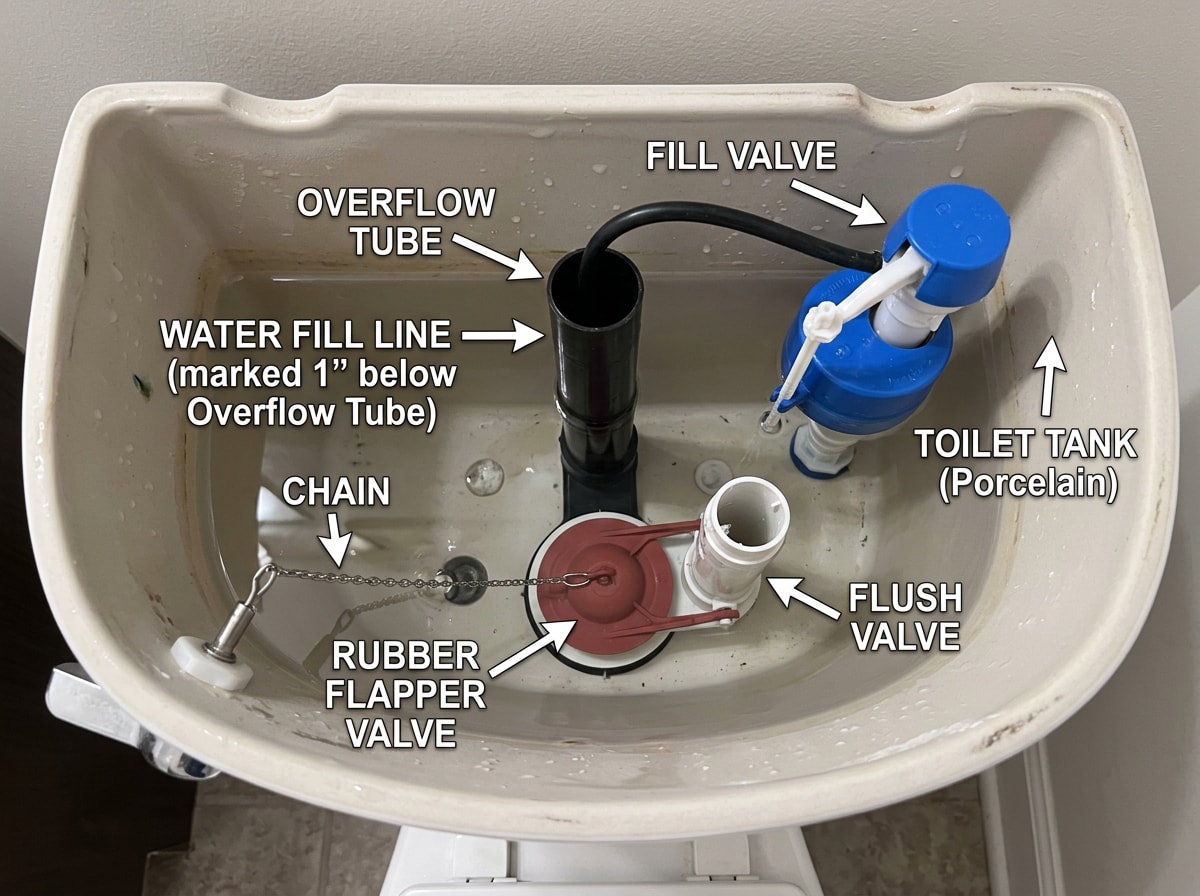
Also check the flapper. Flappers warp, crack, or collect mineral buildup over time, letting water leak past slowly so the tank never fully recharges between flushes. Both problems are cheap, fast fixes, but they won't explain water climbing in the bowl itself.
What Causes Toilet Clogs in Springfield Homes
Most clogs start simple: too much toilet paper flushed at once, which doesn't break down fast enough to clear the trapway before it bunches up. Wipes, paper towels, and hygiene products cause the same problem even when the package says "flushable."
Aging pipes raise the odds, too. Many of Springfield's older neighborhoods still run on original clay tile drain lines, and mature trees along those streets can send roots into pipe joints over the decades, creating the kind of slow, recurring blockage that shows up as repeated clogs in the same toilet. If that pattern sounds familiar, a local inspection through our Springfield, IL service area page can connect you with an assessment before the problem escalates into a sewer line repair.
Tools That Actually Clear a Rising Bowl
| Tool | Best For | Difficulty | When to Stop |
|---|---|---|---|
| Flange plunger | Paper and small debris clogs in the trap | Easy, DIY | After 8-10 honest attempts with no change |
| Toilet auger (closet auger) | Clogs sitting deeper in the trap or branch line | Moderate, DIY | If it won't advance or keeps hitting the same spot |
| Hydro jetting | Scale, grease, and recurring buildup a plunger can't reach | Professional only | Not a DIY option; call a plumber |
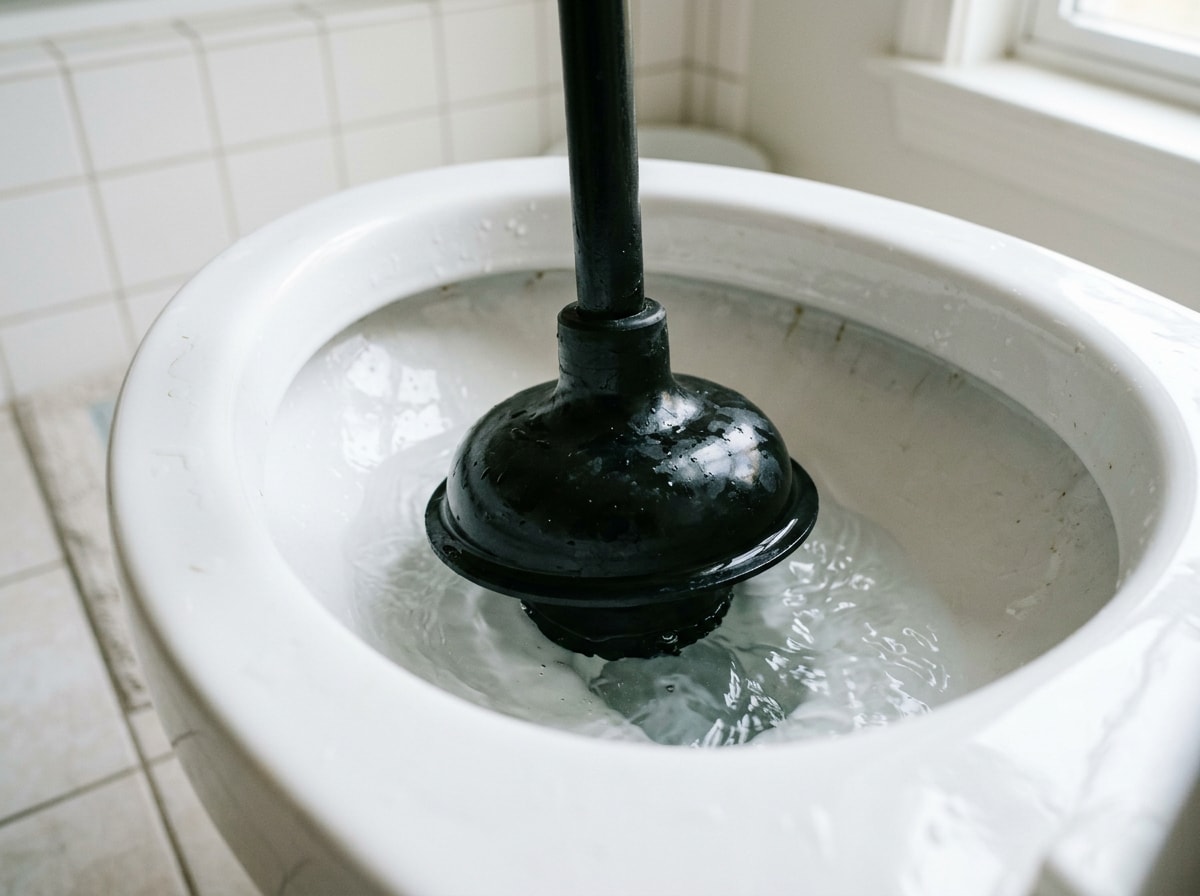
A flange plunger, the kind with an extended rubber flap, seals against the trap opening far better than a flat cup plunger and is the right first tool to reach for. If plunging doesn't clear it, a toilet auger feeds past the trap to break up or pull out blockages sitting deeper in the line. For severe or recurring buildup, a plumber may use hydro jetting to blast high-pressure water through the pipe and scour out what a plunger or auger can't touch.
How to Use a Flange Plunger Correctly
- Set the flange fully over the drain opening so it seats with a tight seal.
- Tilt the plunger slightly as you insert it to let trapped air escape before your first push.
- Push down slowly, then pull up sharply. Repeat this motion about ten times without breaking the seal.
- Flush once to test, and repeat the sequence if water still rises.
Skip the Chemical Drain Cleaner
Chemical drain cleaners are largely ineffective against the kind of solid blockage that causes rising water, and repeated use can damage pipes, seals, and wax rings over time. The U.S. Consumer Product Safety Commission's recall records for household drain cleaners show real cases of leaking bottles and mislabeled hazardous chemicals causing burns, which is worth knowing before one sits in your bathroom cabinet. A flange plunger or toilet auger clears most toilet clogs without that risk.
When to Call a Plumber in Springfield, IL
Call a plumber once multiple toilets or fixtures are affected at the same time. That points to a main sewer line clog rather than a single blocked toilet. Gurgling from nearby drains, or water backing up into a shower or tub when you flush, are supporting signs of the same main-line issue.
Repeated clogs in the same toilet, slow drainage that never fully resolves, or a rising bowl that doesn't respond to plunging and an auger after a few honest attempts are also good reasons to stop troubleshooting. The EPA's overview of sanitary sewer overflows notes that backups into homes cause property damage and real public health concerns, so don't let a stubborn clog sit for days hoping it clears itself.
For homeowners anywhere from Springfield to Chatham or elsewhere in Sangamon County, the fastest path to a fix is getting eyes on the actual blockage. Get a free estimate from our team, or visit our homepage to see the full range of services we offer across the Central Illinois Region.
FAQ
Should I keep flushing if the toilet water is rising?
No. Stop flushing as soon as you see the water climbing toward the rim. Each additional flush adds more water with nowhere to drain, raising the risk of an overflow onto your bathroom floor. Close the water supply shutoff valve if the level gets close to the rim, then start diagnosing.
Why does toilet water rise instead of flushing?
Rising water almost always means a blockage somewhere between the trap and the main drain line, deep enough that you can't see it directly. The flush pushes water in, but the clog stops it from draining back out, so it backs up into the bowl instead.
Can a clogged plumbing vent cause a toilet to rise instead of flush?
Yes. A blocked roof vent or vent stack can starve the drain system of air, which produces gurgling, bubbling, and a bowl that rises or drains sluggishly even without a true clog in the trap. If plunging and an auger don't fix a rising bowl, a vent blockage is worth checking before assuming the clog is simply deeper than expected.
Is a bowl that rises then slowly drains on its own still a problem?
Yes, even if it eventually clears. That pattern is a classic sign of a partial clog, and it usually gets worse over repeated flushes rather than fixing itself. Treat it the same way you would treat a full clog: start with a flange plunger.
When should I call a plumber for a toilet that won't flush?
Call a plumber when multiple fixtures are affected, the same toilet clogs repeatedly, or plunging and augering fail to clear a rising bowl after a few attempts. These signs point to a deeper trapway clog, a blocked vent, or a main sewer line problem that needs professional equipment to clear safely.
Can I use a chemical drain cleaner on a clogged toilet?
It's best to avoid it. Chemical drain cleaners are largely ineffective on the solid clogs that cause a toilet to rise, and repeated use can corrode pipes, wax seals, and rubber gaskets. A flange plunger or toilet auger clears most toilet clogs without that risk.