Toilet supply line size trips up more Central Illinois Region, IL homeowners than almost any other small plumbing fix, mostly because the part has two different measurements and the box on the shelf rarely explains which one applies where. Buy the wrong one and you'll either strip a nut or stand over a leaking bathroom floor at 11 p.m. This guide breaks down the exact sizes, materials, and local quirks our crews run into on service calls from century-old farmhouses to brand-new subdivisions across the region.
Standard Toilet Supply Line Sizes in Central Illinois
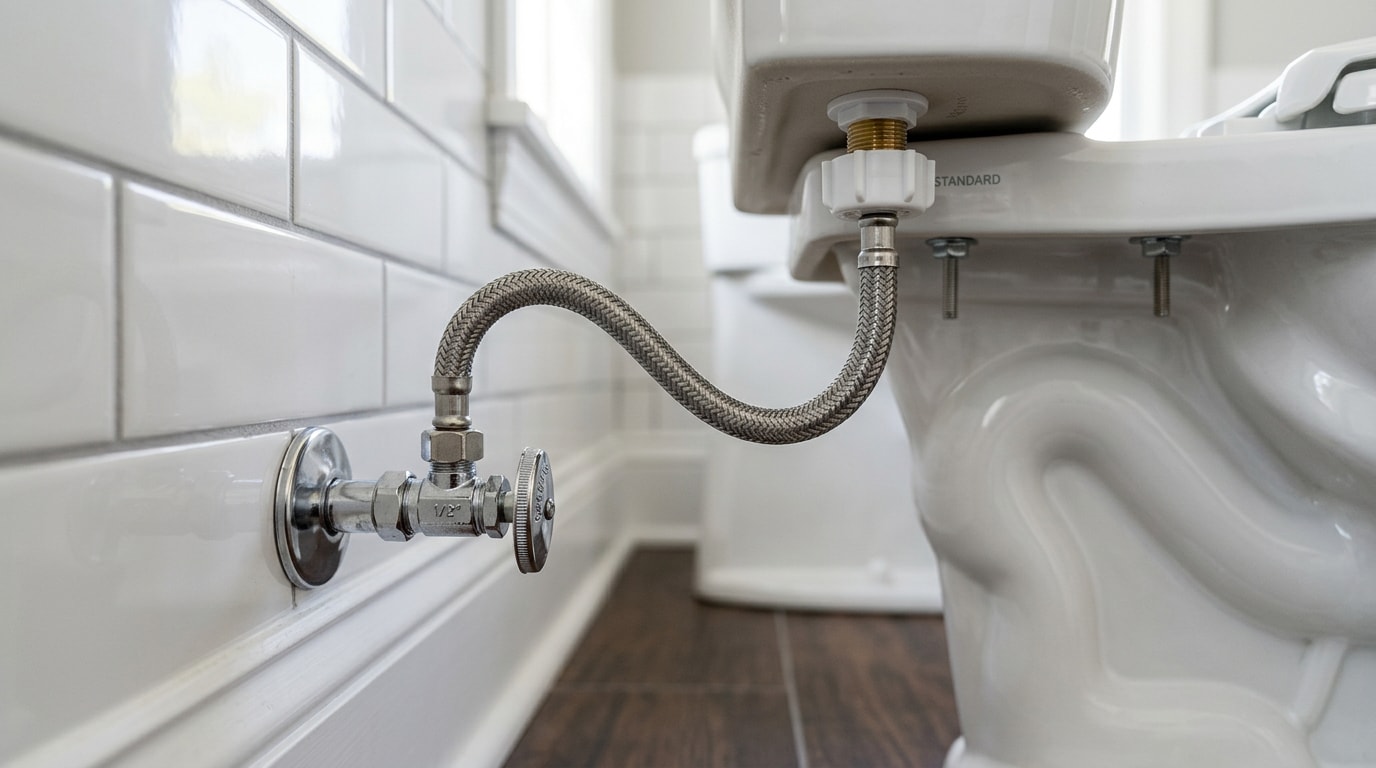
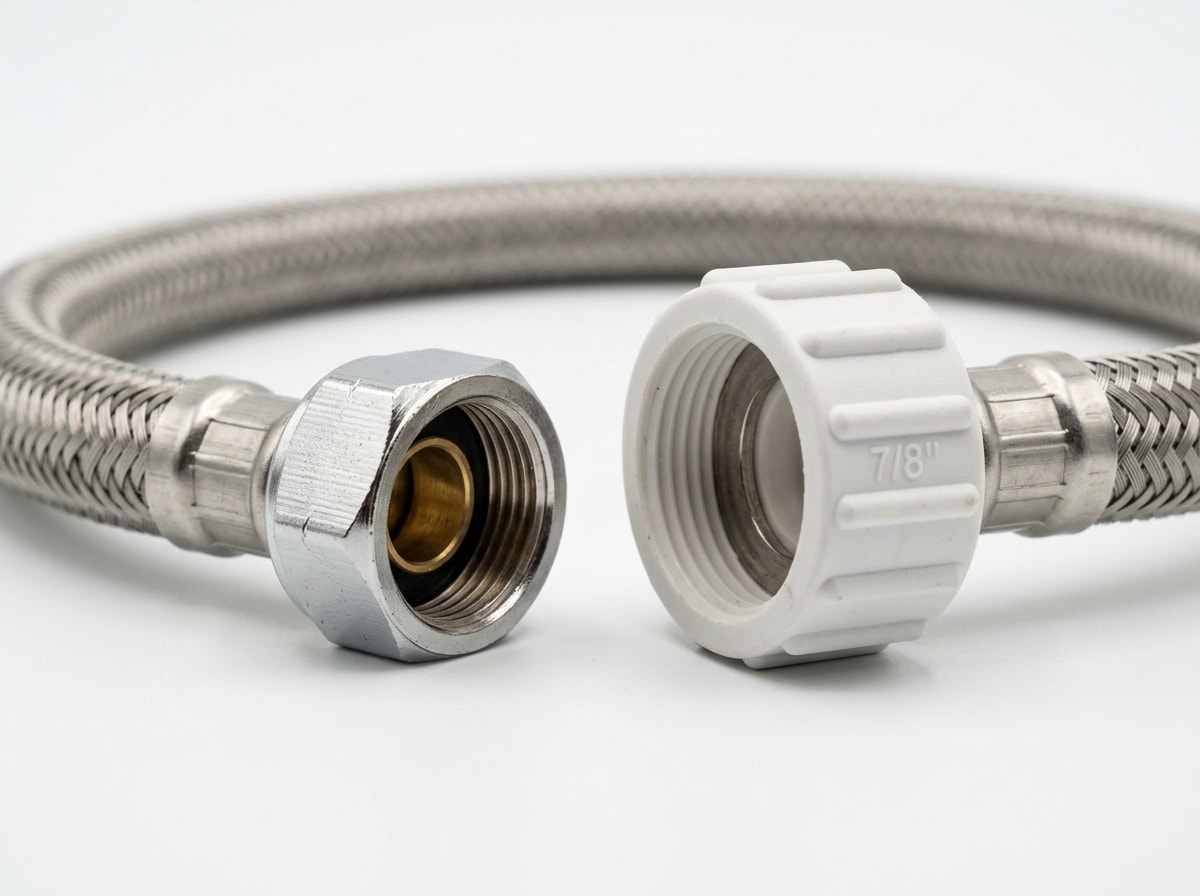
A toilet supply line has two ends, and almost all of the confusion in the plumbing aisle comes from people measuring the wrong one. This supply line connects the water supply to the toilet, with the end that connects to the fill valve measuring 7/8" and the side that connects to the wall or floor using a 3/8" compression fitting.
That pairing is what's sold as a standard toilet connector in every hardware store in the region.
| Connection Point | Common Size | Fitting Type |
|---|---|---|
| Wall or floor shutoff valve | 3/8 inch (older homes: 1/2 inch) | Compression |
| Toilet fill valve | 7/8 inch | Ballcock nut |
| Faucet supply line (for comparison) | 3/8 inch wall end | 1/2 inch fixture end |
Older homes scattered through Sangamon County and the surrounding farm towns sometimes still have a 1/2-inch wall stop instead of the now-standard 3/8-inch fitting. It's worth checking before you buy, because a 3/8-inch nut will simply spin on a 1/2-inch valve without ever sealing.
The Wall End vs. the Toilet End
The wall end threads onto the angle stop and is almost always a 3/8-inch compression fitting, though measuring instead of assuming is cheap insurance in a region with so much older housing stock. The toilet end is nearly universal: a 7/8-inch ballcock nut that threads onto the fill valve shank on virtually every tank-type toilet sold today.
This is also why a faucet supply line will never work on a toilet, even though the two hoses look almost identical hanging on the same store peg. Faucet connectors step down to a 1/2-inch fixture end, not the wider 7/8-inch ballcock thread a toilet needs.
What Actually Determines Your Supply Line Size
The size you need isn't only about what's "standard." Three things decide the right fit for your specific bathroom:
- Home age — Pre-1980s construction common in older Central Illinois neighborhoods often still runs 1/2-inch wall stops.
- Existing valve hardware — Whatever is already installed at the wall dictates the wall-end size; you don't get to pick it independently.
- Household water pressure — Illinois regulates minimum delivered pressure for public water systems, and that baseline affects how a supply line performs at the fixture.
Illinois requires water distribution systems to be designed to maintain a minimum positive pressure of 20 p.s.i. in all parts of the system at all times. That's a floor, not a target, so most homes in the region run well above it. If yours doesn't, a correctly sized supply line won't fix the underlying issue. Our breakdown on how to fix water pressure in Sangamon County covers what actually causes low flow at the fixture.
A bigger supply line doesn't automatically mean a faster tank refill, either. Design improvements have allowed toilets to use 1.28 gallons per flush or less while still providing equal or superior performance, which is 20 percent less water than the current federal standard of 1.6 gallons per flush. Modern low-flow toilets simply don't demand the flow volume older fixtures did, so the 3/8-inch standard keeps up fine in nearly every residential setup.
Materials Compared
Today's supply lines come in a handful of common materials, and each one balances cost, flexibility, and lifespan a little differently.
| Material | Durability | Best For | Typical Cost |
|---|---|---|---|
| Braided stainless steel | High, resists kinking and corrosion | Older homes, tight or awkward access | $8–$20 |
| Flexible nylon/PVC | Moderate, prone to cracking over time | New construction, straightforward access | $5–$12 |
| Rigid copper | Very high, but requires soldering | Finished basements, long-term installs | $15–$30 |
For older homes with rigid, hard-to-reach plumbing, braided stainless is usually the more forgiving choice. For new builds with easy access underneath the tank, nylon can still perform well at a lower cost.
How to Measure Your Existing Supply Line
Before you buy a replacement, confirm what's actually installed rather than guessing.
- Shut off the water at the wall valve, then flush the toilet to drain the tank.
- Disconnect the line at both ends with an adjustable wrench.
- Measure the outer diameter of the threads at the wall fitting, not the flexible tube itself.
- Measure the nut at the ballcock end separately; the two numbers are almost never the same.
- Match both measurements against the chart above before heading to the store.
Fitting and thread dimensions for compression connections like these fall under recognized national standards. These standards apply to numerous supply fittings and accessories situated between the supply stop and terminal fitting , which is exactly the span a toilet supply line covers.
Signs You Need a New Supply Line
Watch for these warning signs rather than waiting for a full failure:
- Moisture or mineral crust at either connection point
- A kink or crimp in the flexible section
- Visible rust on a braided exterior
- A line older than 10 years, even if it looks fine
- A loose nut that won't seat tight by hand plus a quarter turn
Toilet water supply lines should be checked regularly and replaced every 5 to 10 years, or sooner if you notice any signs of wear, corrosion, or leaks. Waiting for an obvious puddle isn't a strategy; a burst line under full household pressure can dump water into a bathroom fast.
If your shutoff valve won't turn, or you spot corrosion creeping up the fitting, don't force it. Get a free estimate and we'll handle the shutoff, sizing, and swap safely in one visit.
Serving Homeowners Across the Region
We see the full range of supply line setups across Springfield, Sangamon County, Chatham, and the wider Central Illinois Region — everything from original 1960s wall stops to last year's remodel. If you're not sure which fitting is behind your toilet, it's faster to ask than to make two trips to the hardware store.
FAQ
What size supply line does a toilet use?
Most toilets use a 3/8-inch compression fitting at the wall and a 7/8-inch ballcock connection at the fill valve. That pairing is the current standard sold in nearly every store.
Are toilet and faucet supply lines interchangeable?
No. A faucet supply line has a smaller 1/2-inch fixture end, so it won't thread onto a toilet's 7/8-inch ballcock nut even though the hoses look similar.
What size is a toilet shutoff valve?
Most modern shutoff valves have a 3/8-inch compression outlet. Homes built before the 1980s sometimes still have 1/2-inch valves, so measure before buying a replacement line.
What happens if I install the wrong size supply line?
The connector either won't thread on at all, or it will seat without sealing and leak under pressure. Neither outcome shows up until the water's already running.
How often should I replace my toilet supply line?
Inspect it annually and plan to replace it every 5 to 10 years, or sooner at the first signs of cracking, rust, or a slow drip at either fitting.
Can I use a different material for my supply line?
Yes. Braided stainless steel, nylon, and copper are all acceptable, as long as the fitting sizes on both ends match your toilet and wall valve.
Ready to stop guessing at the hardware store? Visit Central Illinois Gutters or request your free estimate and we'll match the right supply line to your toilet the first time.