Shopping for shower plumbing parts in Central Illinois Region, IL gets confusing fast once you realize a shower is really four separate systems wearing one trim kit. Supply lines, a valve, a diverter, and a drain all have to work together, and buying the wrong cartridge or mismatched handle is the single most common mistake homeowners make before calling a plumber. This guide breaks down every part by zone so you know exactly what to ask for at the counter or over the phone.
What Makes Up a Shower Plumbing System
Shower plumbing parts fall into four groups: water supply lines, the valve assembly, delivery fixtures like the showerhead, and the drainage system. Each group has a distinct job, and a failure in one rarely means the whole system needs replacing, usually just a single worn part.
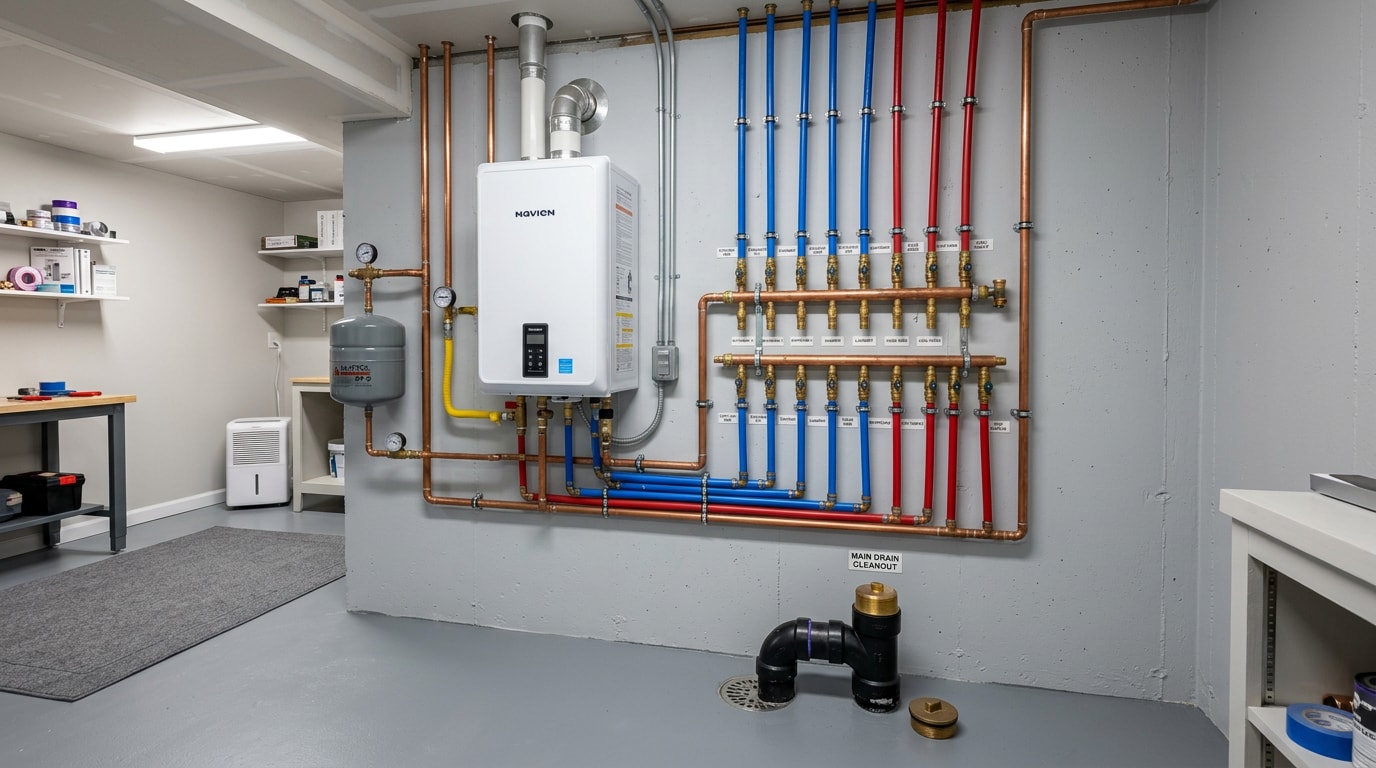
- Supply lines carry hot and cold water to the shower, typically through copper, PEX, or CPVC piping.
- The valve assembly mixes hot and cold water and controls flow to the outlet.
- Delivery fixtures (showerhead, handheld unit, tub spout) send water onto the bather.
- The drainage system carries water away through a drain, strainer, and trap.
A lot of housing stock across the Central Illinois Region, IL still runs on galvanized steel or early-generation copper supply lines. In our service calls around Springfield and Sangamon County, the homes giving customers the most trouble are almost always pre-1990 builds where the original rough-in threading doesn't match modern cartridge-style valves. Matching fittings and threading matters more here than it does in newer construction, so measure twice before you buy.
Shower Plumbing Diagram: How Water Moves Through the System
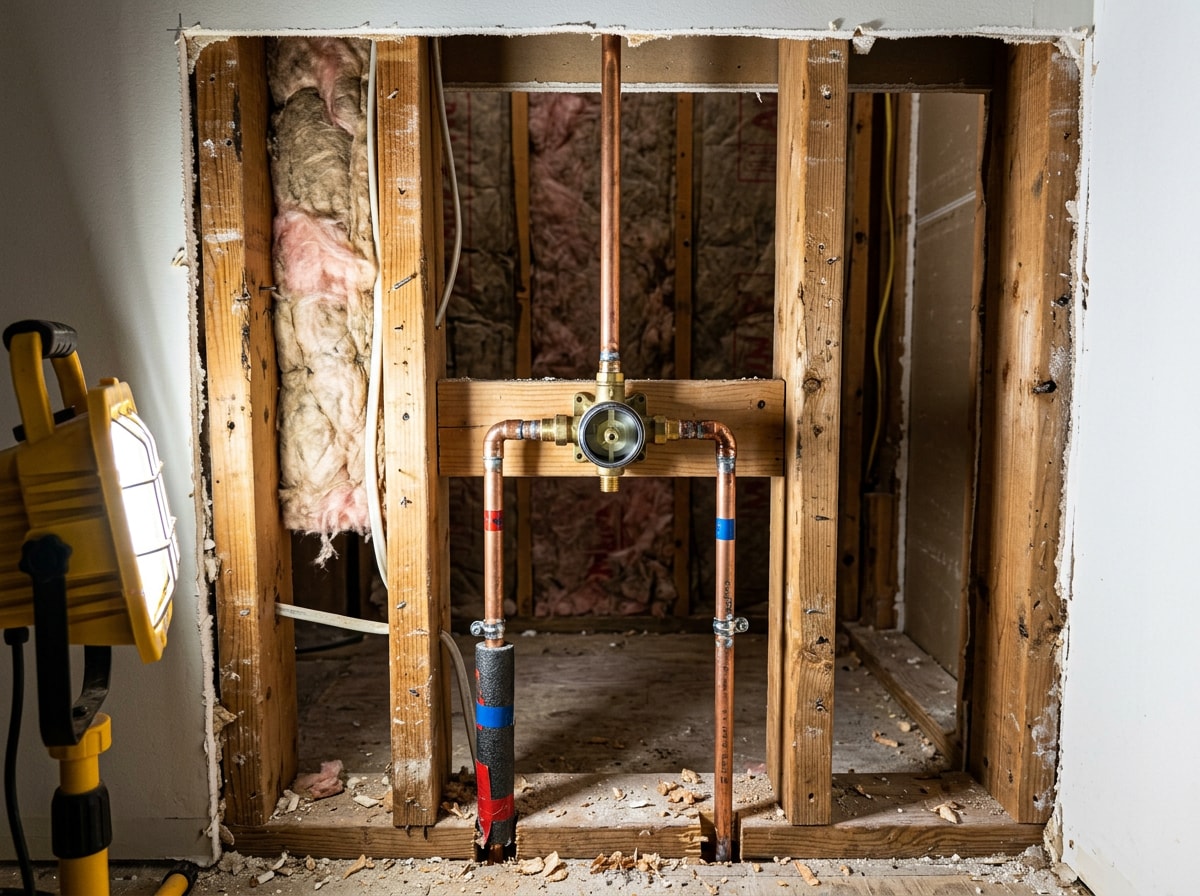
Water enters through two supply lines, one hot, one cold, that meet at the valve body, where they're mixed to the temperature you set. From there, water travels up a short riser pipe and out through the shower arm to the showerhead. On the way down, it exits through a drain assembly and trap before rejoining the home's waste line.
Most repair jobs trace back to one of three zones: the valve, the diverter, or the drain. Knowing which zone is failing before you shop saves a return trip to the store.
Valves, Cartridges, and Anti-Scald Protection
Every shower has two functional cores: the valve assembly controlling water coming in, and the drain-and-trap system controlling water going out.
Shut-Off Valves
A shut-off valve lets you stop water flow to just the shower without cutting supply to the rest of the house. This is the first step before swapping a cartridge, diverter, or trim piece. Older valves in Central Illinois homes that haven't been turned in years may need gentle exercising, or outright replacement, before they seal reliably again.
Rough-In Valves and Cartridge Types
Behind the trim, a rough-in valve houses the cartridge that regulates both temperature and flow when you turn the handle. Two cartridge types dominate the market, and they handle scalding risk differently.
| Valve Type | How It Responds | Typical Use |
|---|---|---|
| Pressure-balancing (Type P) | Adjusts the hot/cold ratio when supply pressure shifts, such as when a toilet flushes elsewhere in the house | Most common in single-family homes |
| Thermostatic (Type T) | Locks in a specific output temperature regardless of pressure changes | Multi-outlet showers, homes with kids or elderly residents |
| Combination (Type T/P) | Pairs both functions for pressure and temperature control | Higher-end remodels, code-sensitive installs |
Type P valves or pressure balancing, Type T valves or thermostatic and Type T/P valves known as combination thermostatic/pressure balancing are the three categories recognized under the industry standard. The maximum safe water temperature, usually 120 degrees Fahrenheit, is mandated by the local code , which is why many jurisdictions require one of these valve types instead of a plain two-handle faucet. If you've already ruled out the valve and suspect low household pressure instead, our guide on how to fix water pressure in Sangamon County, IL walks through the most common causes.
Shower Diverter Parts
A diverter redirects water between outlets, say, from a tub spout to a showerhead, or between a fixed head and a handheld unit. Common diverter parts include the knob or lever, the diverter valve itself, internal seals, and a switching mechanism. In a multi-outlet shower, a worn diverter usually shows up as weak flow or water coming out the wrong outlet, rather than a complete failure.
Showerheads, Trim Kits, and Water-Efficient Options
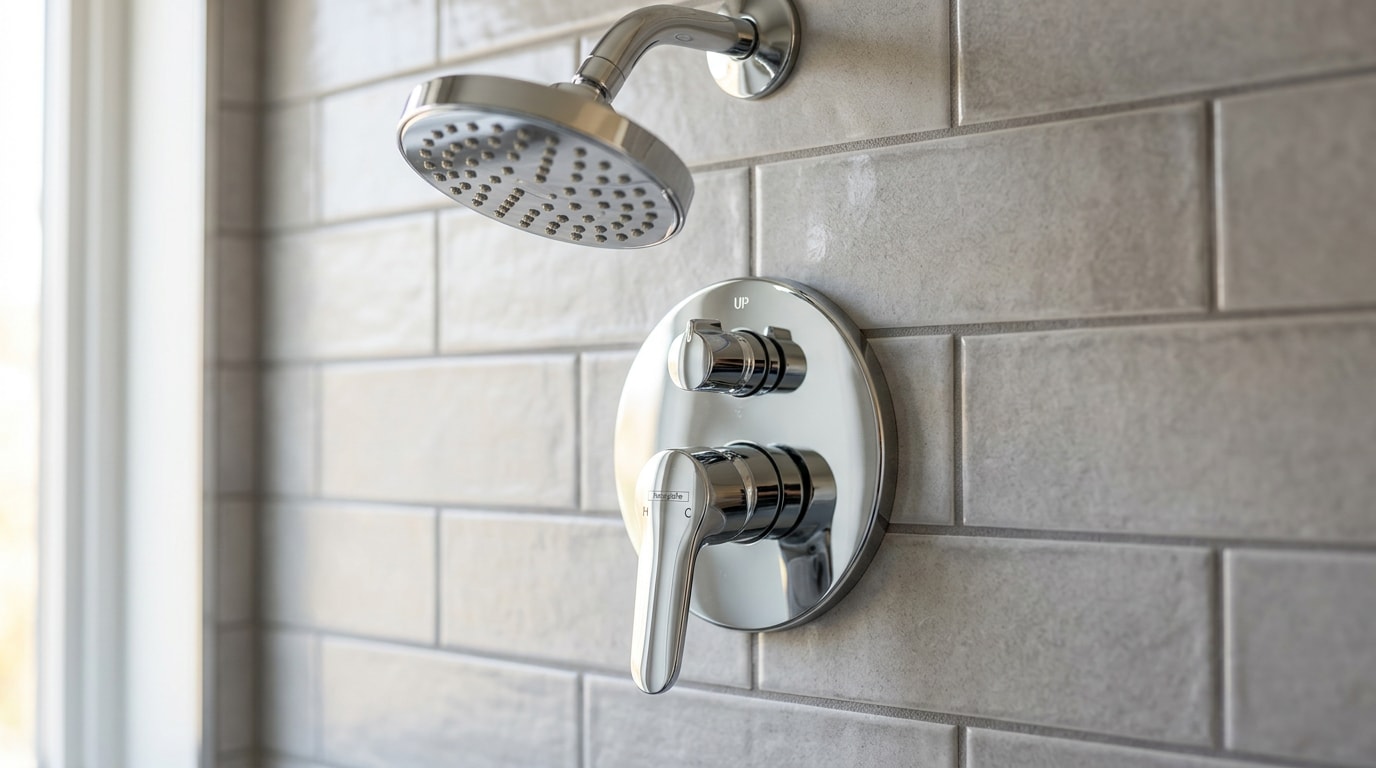
The showerhead is the most visible delivery part, available as fixed, handheld, or rain-style units that produce a wide, gentle overhead flow instead of a concentrated spray. All of these connect to the shower arm extending from the wall or ceiling.
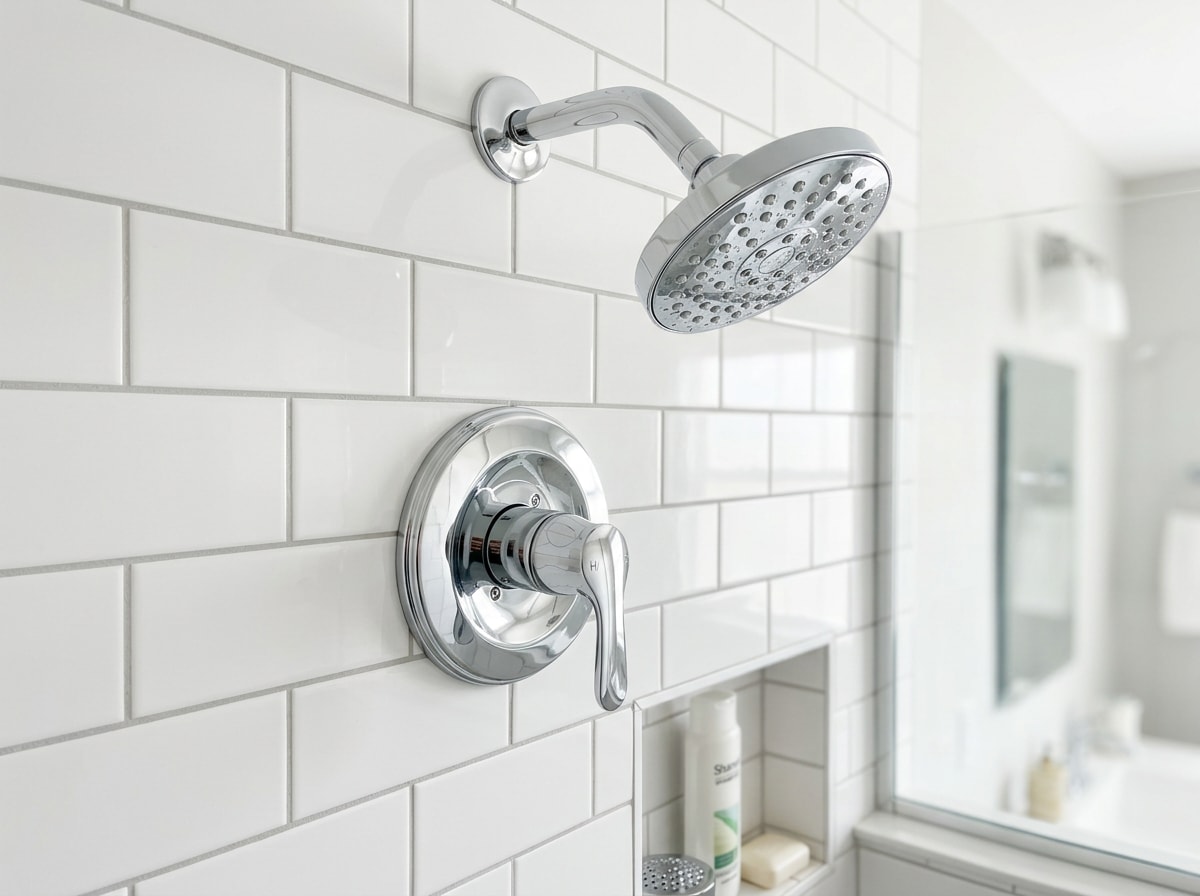
Covering the wall opening is the trim kit, the visible hardware that includes the handle, escutcheon plate, and any decorative rings. Trim kits must match the valve manufacturer and model underneath. Buying a showerhead without checking the valve behind it is the single most common upgrade mistake homeowners make.
If water efficiency matters to your household, standard showerheads use 2.5 gallons of water per minute, while water-saving showerheads that earn the WaterSense label must demonstrate that they use no more than 2.0 gpm . That's a meaningful drop without a noticeable loss in pressure for most households.
Handles, Escutcheons, and the Parts You Touch Every Day
The parts you actually touch each day, handles, knobs, and trim covers, are usually the first thing to show visible wear.
Common handle styles include:
- Single-lever handles
- Double handles (separate hot/cold)
- Round knobs
- Cross handles
- Thermostatic control handles
Matching the handle style to your existing valve is essential when shopping for replacement parts, since most handles are brand- and model-specific rather than universal.
Escutcheon Plate
The escutcheon plate is the decorative cover concealing the wall opening around the valve. Beyond looks, it protects the rough-in plumbing from moisture and gives technicians a clean access point during future repairs.
Which Shower Parts Wear Out First (and Why Central Illinois Water Makes It Worse)
Some shower parts wear out faster than others simply due to constant friction, mineral exposure, or pressure cycling. The most frequently replaced items are:
- Shower cartridges
- Rubber seals and O-rings
- Diverter internals
- Showerhead gaskets
Most cartridges last three to seven years, and that range shrinks in homes with harder water. Water that contains more than 200 mg/l (milligrams/liter) or 200 ppm (parts per million) as calcium carbonate, or 12 grains per gallon, is considered to be hard and may cause plumbing and laundry staining problems , according to the Illinois Department of Public Health. A lot of Central Illinois municipal and well water falls into or above that range, which means mineral buildup inside the cartridge, not just age, is often what forces an early replacement.
| Repair Type | Typical Cost Range (2026 estimate) | What's Included |
|---|---|---|
| Cartridge-only replacement | $150–$300 installed | Cartridge swap, no wall access needed |
| Full valve replacement | $300–$600 installed | Opening the wall, new rough-in valve, trim |
These ranges are general estimates; material grade, brand matching, and access difficulty all swing the final number. Worn shower parts rarely fail all at once, usually it's a slow drip, a stiff handle, or a weakening spray that signals it's time.
When to Call a Licensed Plumber in Central Illinois Region, IL
If a replacement part doesn't solve the issue, or you're not sure which zone is actually failing, it's worth getting eyes on the problem before you buy more parts. Our team handles diagnosis and repair across the Central Illinois Region, IL, including Springfield, Sangamon County, and Chatham. Get a free estimate before you spend money on a part that might not fix the leak.
For related buying guidance on fixtures beyond the shower, see our plumbing fixtures pricing and buying guide for Springfield, IL. You can also visit our homepage for a full list of services we provide across the region.
FAQ
What are the main parts of a shower faucet?
Common shower faucet parts include the showerhead, shower arm, trim plate, handle, rough-in valve, cartridge, a diverter if multiple outlets are used, and the handheld hose and wall outlet where applicable. Together these parts control water delivery, temperature, and direction from supply to spray.
What is the plumbing behind a shower wall called?
It's generally called the rough-in, the section that includes the valve body, cartridge, supply line connections, and riser pipe hidden inside the wall cavity before the trim kit is installed.
Why does my shower drip after I turn it off?
A worn cartridge, a damaged seal, trapped debris, or mineral buildup can all prevent a valve from fully shutting off. A persistent drip almost always points to the cartridge first, since it's the part doing the actual sealing work.
Can I replace a shower cartridge myself?
Many homeowners replace a cartridge themselves with the shut-off valve closed and the correct brand-matched part in hand. If the handle won't budge, the valve body is corroded, or you're not confident shutting off water to the fixture, call a licensed plumber instead of forcing it.
What's the difference between a pressure-balancing and thermostatic valve?
A pressure-balancing valve keeps the hot-to-cold ratio steady when supply pressure changes elsewhere in the house. A thermostatic valve goes further and locks in an exact output temperature regardless of pressure shifts, which is why it's often specified for homes with young children or elderly residents.
How much does it cost to replace a shower valve?
A cartridge-only replacement typically runs $150–$300 installed, while a full shower valve replacement, including opening the wall, often lands between $300 and $600. Central Illinois labor rates generally run a bit below national metro averages, though material and access difficulty still swing the final number.