
Searching for mechanical electrical plumbing Central Illinois Region, IL help usually means something in your home's hidden systems just failed, and you need to know who's actually allowed to fix it. Illinois splits licensing oversight across three separate trades and two different state agencies, which trips up a lot of homeowners mid-repair. Here's how the three trades break down, who's legally allowed to touch what, and why the water running off your roof has more to do with your plumbing and electrical systems than most people realize.
What "Mechanical, Electrical, and Plumbing" Actually Covers
MEP is shorthand for the three systems that make a house or building livable: heating and cooling (mechanical), power and wiring (electrical), and water supply, drainage, and gas lines (plumbing). On a commercial job, these three trades are usually coordinated by separate licensed crews working off the same set of plans. On a house, they're just as separate legally, even though homeowners tend to lump them together as "the systems guys."
That distinction matters the moment something breaks. A failed sump pump might look like a plumbing problem, an electrical problem (the pump's circuit), or both. Central Illinois homes built before the 1990s often have all three systems tangled in the same crawlspace or utility closet, which is exactly where cross-trade confusion causes the most expensive mistakes.
Illinois Licensing Rules for MEP Trades
This is the part most homeowners get wrong, and it's worth getting right before you hire anyone.
Plumbing is the one trade Illinois licenses at the state level. The Illinois Department of Public Health regulates plumbers and the plumbing trade by maintaining a minimum code of standards for plumbing practices.
Under the Illinois Plumbing License Law, the Department licenses plumbers, plumbing contractors, plumbers' apprentices, irrigation contractors, and retired plumbers. That's a bigger program than most people assume: IDPH licenses approximately 8,900 plumbers and 2,000 apprentice plumbers statewide.
Electrical work is handled completely differently. There is no statewide electrician license in Illinois at all. Licensing for electrical contractors is set city by city and county by county, which means a license good in Peoria may not transfer to a neighboring town without separate registration.
HVAC falls into that same local-only category as electrical. Here's the breakdown homeowners actually need:
| Trade | Who Licenses It | How to Verify |
|---|---|---|
| Plumbing | State (Illinois Department of Public Health) | IDPH plumbing license lookup |
| Electrical | Local city/county | Local building or licensing department |
| HVAC/Mechanical | Local city/county | Local building or licensing department |
| Roofing | State (IDFPR) | IDFPR license lookup |
If a contractor tells you Illinois issues one statewide "MEP license," that's a red flag, not a credential.
How to Vet a Local MEP Contractor
A licensed, local contractor brings faster response times, documented insurance, and a working relationship with the inspectors who sign off on the job. Out-of-area or unlicensed providers often can't match any of that.
| Factor | Licensed Local Contractor | Unlicensed/Out-of-Region Provider |
|---|---|---|
| Response time | Same-day or next-day | Days, plus travel delays |
| Code compliance | Familiar with local inspectors and codes | Often unfamiliar with local requirements |
| Liability coverage | Bonded and insured, verifiable | Frequently uninsured |
| Permit handling | Pulls permits as part of the job | May skip permits entirely |
Before hiring anyone for plumbing, mechanical, or electrical work, ask for their license or registration number and confirm it with the issuing agency, not just the contractor's own paperwork.
The Overlooked MEP Connection: Your Gutters, Soffit, and Fascia
Here's the piece most MEP guides skip entirely, and it's where a lot of avoidable repair bills start.
Your home's exterior drainage system, gutters, soffit, and fascia, isn't a separate concern from your mechanical, electrical, and plumbing systems. It's the first line of defense protecting all three.
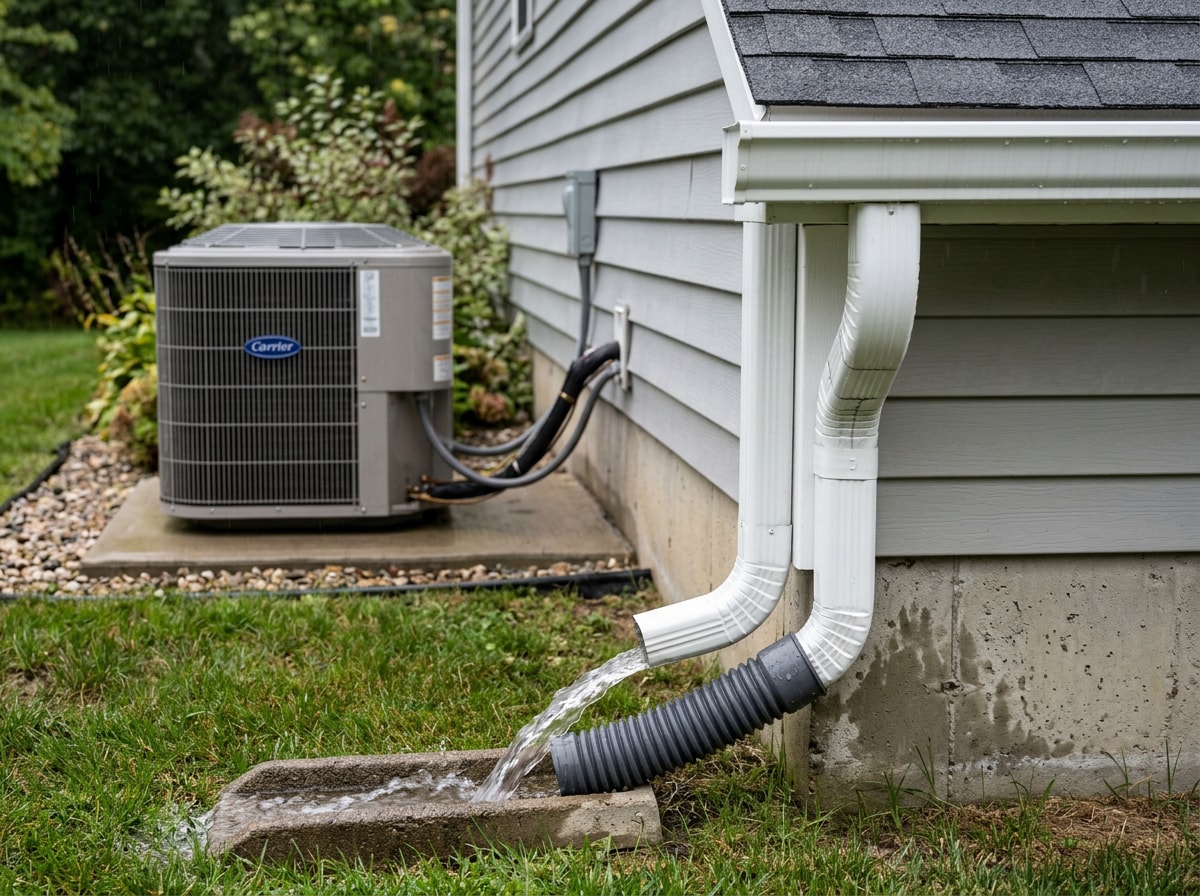
On estimate calls across the region, our crews regularly find standing water pooling next to outdoor AC condensers, electrical meter bases, and foundation vents, water that overflowed from clogged or undersized gutters with nowhere else to go. That moisture doesn't stay outside:
- Water pooling near a condenser accelerates corrosion on mechanical components.
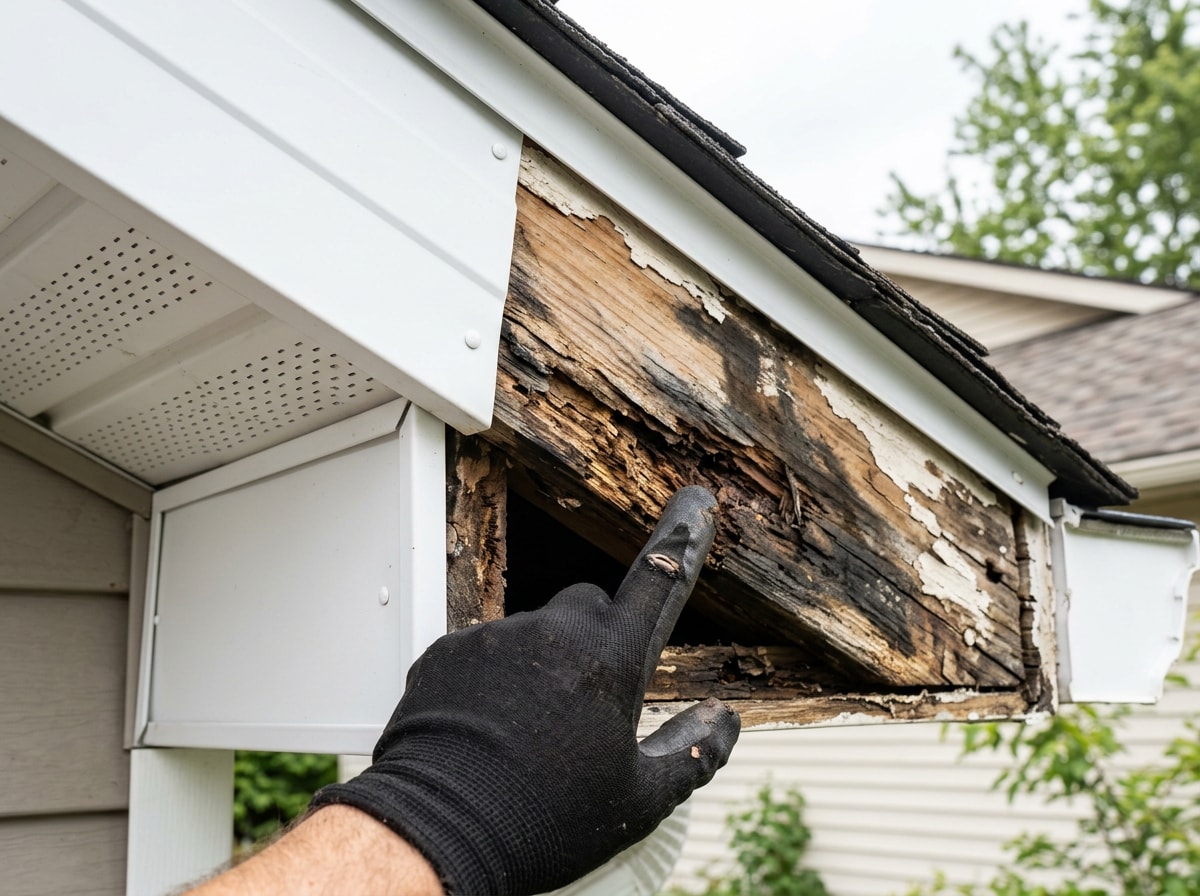
- Water wicking into soffit and fascia rots the wood that electrical service masts and vent stacks are anchored to.
- Water tracking down a foundation wall finds its way into basement plumbing runs and sump systems.
A properly installed and maintained gutter system, paired with solid soffit and fascia, keeps that water moving away from the house instead of soaking into it. If you want to see what that looks like on your own property, our gutter services and exterior services pages cover installation, repair, and the soffit and fascia work that ties it all together, including full soffit and fascia replacement when the old material has already taken damage.
Common Residential MEP Problems We Hear About
Most homeowner calls fall into a handful of repeat issues. A few of the ones we see most often in the Central Illinois Region:
- Low or inconsistent water pressure, often tied to aging supply lines or fixture wear
- Toilets that won't flush properly or keep running after a flush
- Water heaters nearing the end of their service life
- HVAC and plumbing conflicts in older crawlspaces and mechanical rooms
If you're dealing with one of these right now, our guide on HVAC plumbing in Sangamon County, IL walks through the codes and common problems that show up when mechanical and plumbing systems share tight spaces, a frequent source of confusion in older Central Illinois homes.
Preventive Maintenance Saves Money
Reactive repairs almost always cost more than scheduled upkeep, and that's just as true for exterior drainage as it is for HVAC or plumbing. On the mechanical side, sealing and insulating ducts can improve the efficiency of a heating and cooling system by as much as 20 percent, and sometimes much more. The same logic applies to your gutters: a clean, properly pitched system costs far less to maintain twice a year than it does to repair after ice damming or foundation water intrusion sets in.
Service Area
We work throughout the Central Illinois Region, IL, including Springfield, Sangamon County, and Chatham. If you're not sure whether your address falls inside our coverage area, contact us and we'll confirm before scheduling anything.
Get Your Free Estimate
Whether the issue is a clogged gutter dumping water next to your outdoor HVAC unit or soffit that's finally rotted through, waiting rarely makes the fix cheaper. Visit {{SITE_URL}} to see our full range of services, or go straight to {{SITE_URL}}/contact to get a free estimate from a crew that knows this region's codes, soil, and weather patterns.
FAQ
What does MEP stand for?
MEP stands for mechanical, electrical, and plumbing, the three core systems that provide climate control, power, and water/drainage in a home or building.
Is it illegal to do plumbing without a license in Illinois?
Yes. Individuals who plan, inspect, install, alter, extend, repair, and maintain plumbing systems in the state of Illinois must be licensed. Plumbing licensing is handled by the Illinois Department of Public Health, not a local building department.
Who licenses electricians and HVAC contractors in Illinois?
Neither trade is licensed at the state level. Electrical and HVAC licensing is set by individual cities and counties, so requirements and verification steps vary depending on where the work takes place.
Can a homeowner do their own plumbing in Illinois?
Limited DIY work on a primary residence is allowed in some municipalities, but most still require permits and inspections for anything beyond minor repairs like swapping a fixture. Always check with your local building department before starting.
How can I check a plumber's license in Illinois?
You can verify a plumber's license through the Illinois Department of Public Health, which maintains licensing records for plumbers, apprentices, and plumbing contractors statewide.
Do gutters really affect my home's plumbing or electrical systems?
Yes. Overflowing or clogged gutters route water straight toward foundations, crawlspaces, and exterior electrical and HVAC equipment, which is exactly where moisture-related plumbing and mechanical problems start.